Stack up against Nubank

Compare Your Deck

Nubank's 2014 Pitch Deck

Fintech
Stage: Various
Raised: Multiple
Year: 2014
Slides: 13
Outcome: IPO at $41B valuation

Pitch Deck

1 / 13
Slide 1
Click to expand

Deck Analysis

This 2014 Nubank pitch deck presents an early-stage fintech play that frames the company as a technology-first challenger to Brazil's incumbent banks. It combines clear positioning (the anti-bank), market timing, product/brand strategy, a simple business model, and an ask for seed capital. The deck stands out for marrying emotional brand messaging with operational detail — an approach that helped Nubank scale from startup to a multibillion-dollar public company.

Cover and positioning: clarity of identity

Cover and positioning: clarity of identity

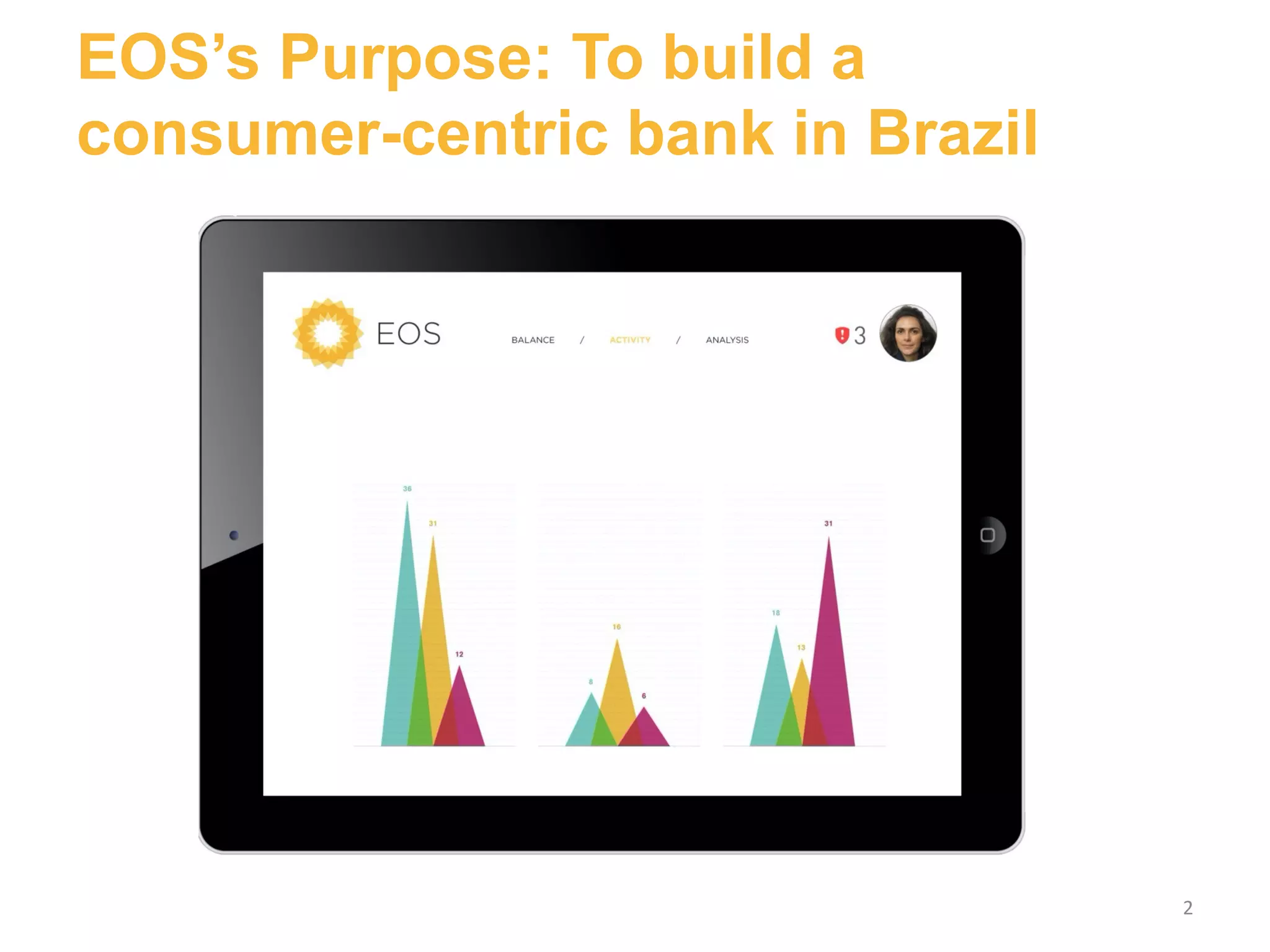
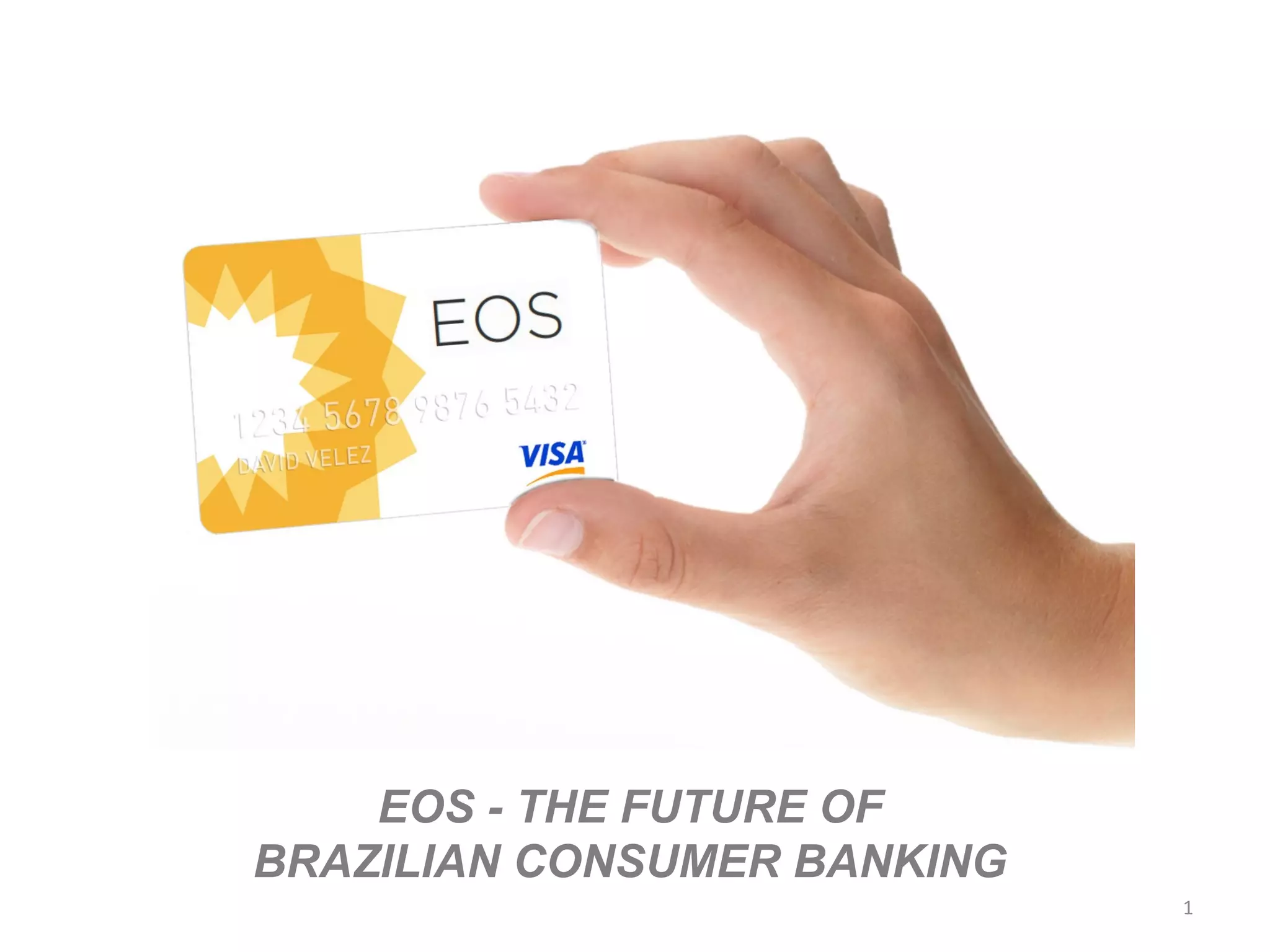
The first slide is a clean visual: a card held in a hand and a short tagline that positions EOS (Nubank) as the future of Brazilian consumer banking. It sets a confident tone and signals the product focus immediately: a modern card and consumer banking experience. The design is minimal and intentional, communicating product-first thinking rather than financial jargon.

The lesson for founders is that the cover should communicate core identity in one image and a short line. Nubank's early cover does this well by showing the product and hinting at disruption, preparing the audience for a deck that balances brand with business detail.

Key Takeaway: Open with a simple, product-forward visual and one-line positioning to anchor the audience quickly.
The Big Picture: framing incumbents vs challenger

The Big Picture: framing incumbents vs challenger

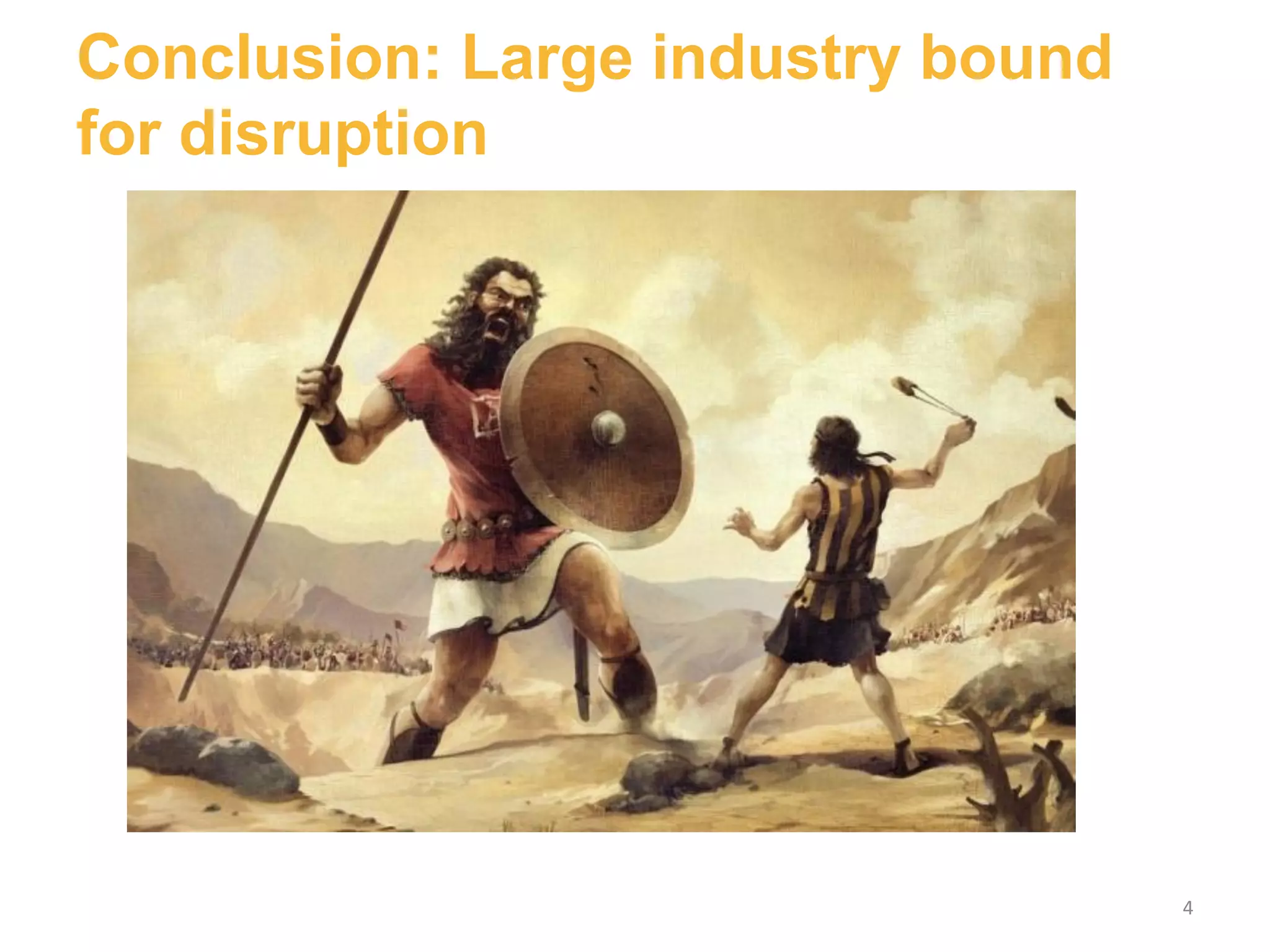
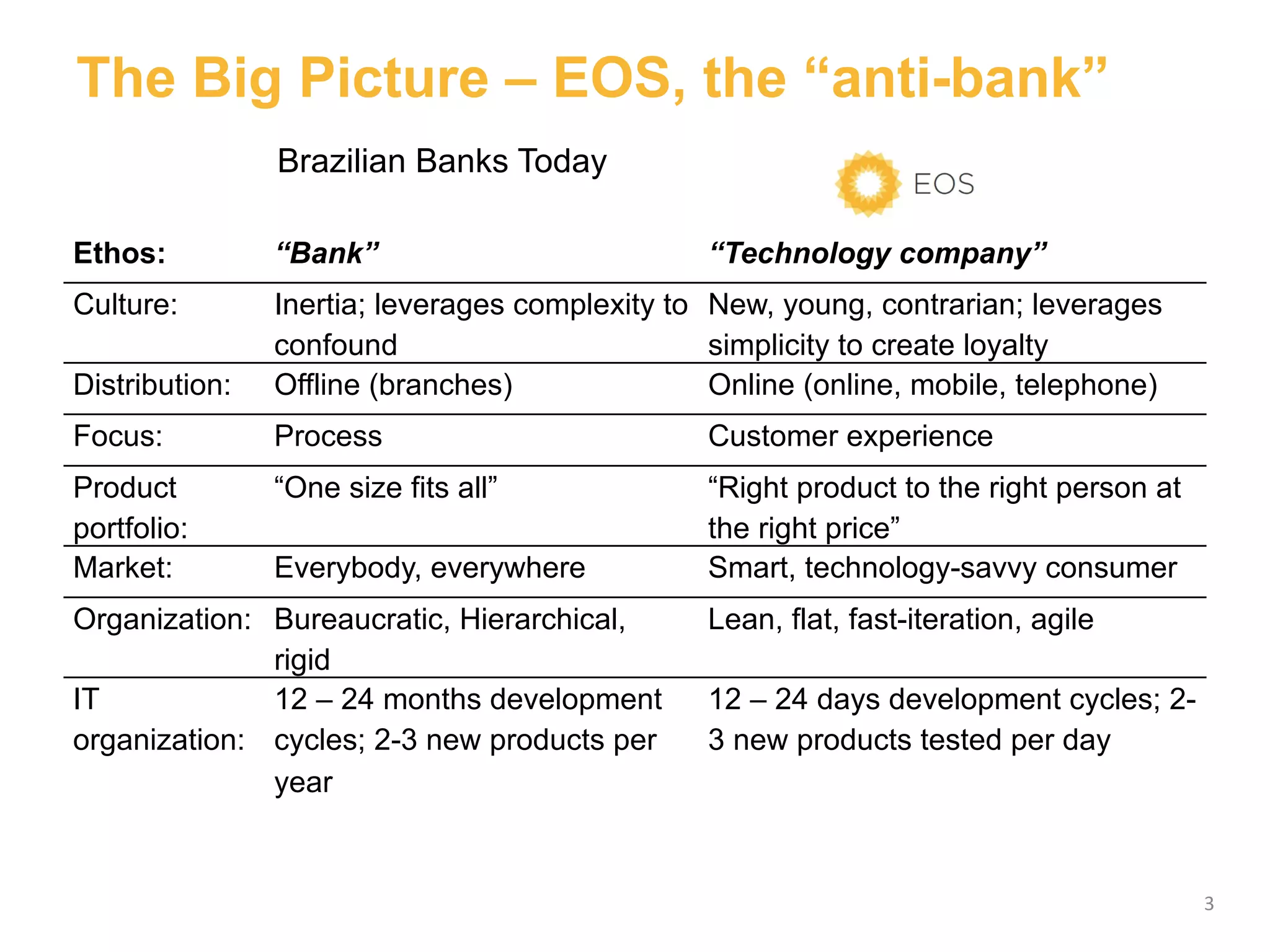
Slide 3 (the comparative table) lays out a concise, strategic narrative: established banks are process-driven, branch-focused and bureaucratic, while Nubank positions itself as a technology company that leverages simplicity, agility and customer experience. This juxtaposition converts an abstract claim of disruption into concrete operational contrasts across culture, distribution, product, market and IT cycles.

Founders can learn from this approach: a short, structured comparison shows why incumbents are vulnerable and which specific advantages the startup brings. It also helps investors assess defensibility and execution risk by linking cultural choices to measurable outcomes like development cycles and product iteration speed.

Key Takeaway: Use a simple comparison table to show exactly how your model breaks incumbent assumptions and where you have sustainable operational advantages.
Solution and product/brand balance: brain versus heart

Solution and product/brand balance: brain versus heart

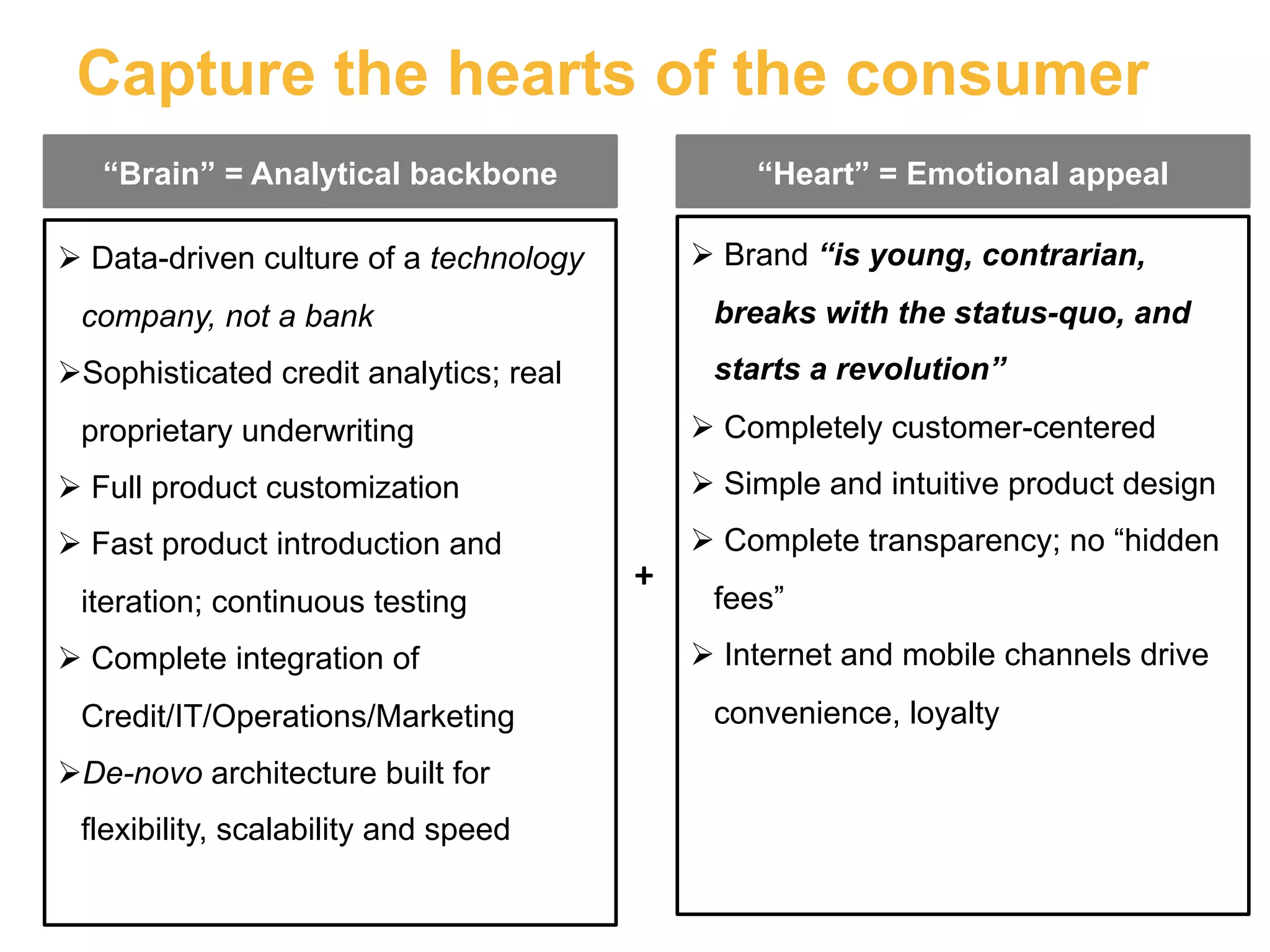
The slide that contrasts the 'brain' (analytical backbone) with the 'heart' (emotional appeal) is one of the deck's most instructive elements. It communicates that Nubank is not solely a credit or payments product; it is a combination of data-driven underwriting, rapid product iteration and a brand that resonates emotionally with younger consumers. The dual-column framing helps investors see both technological defensibility and go-to-market differentiation.

For founders, the key takeaway is to show both sides of your business: the hard, technical moat and the softer, brand-led adoption engine. Presenting them together — with clear bullets on analytics, architecture and customer experience — reduces the chance investors view the startup as one-dimensional.

Key Takeaway: Explicitly present your technical defensibility and brand/marketing strategy side-by-side so investors understand both how you win and why customers will care.
Why now: timing and market forces

Why now: timing and market forces

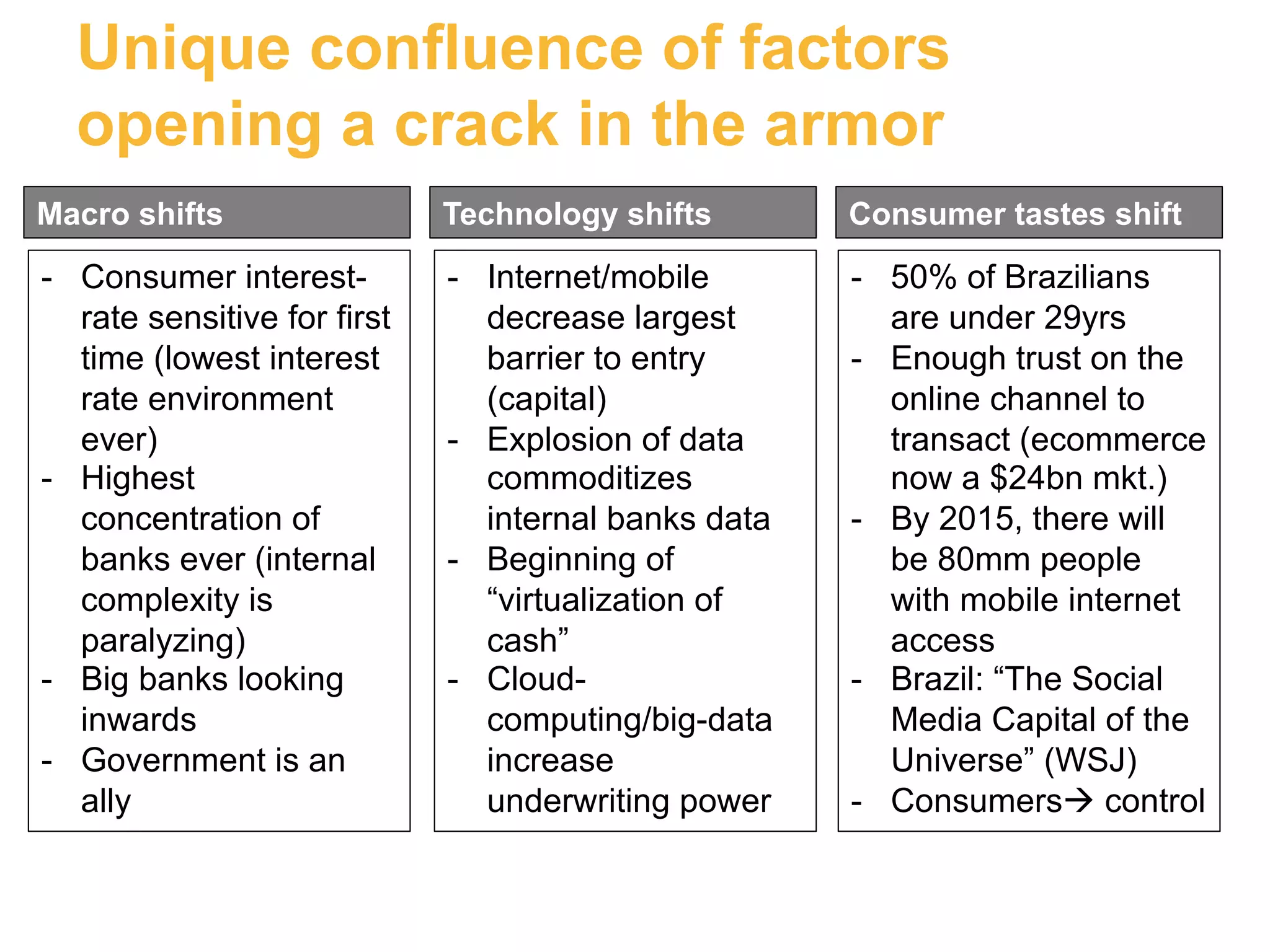
The 'Why Now' content (unique confluence of factors) lays out macro shifts, technology shifts and consumer taste shifts that create a window of opportunity. The slide cites low interest rates, concentrated incumbents, mobile and cloud adoption, explosive data availability and a young, digitally native population — all tailored to Brazil but framed in a way that shows a durable market opening.

This is effective because it ties the startup's plan to broader, verifiable trends rather than optimistic assumptions. Founders should follow this model by tying their product to multiple independent tailwinds and quantifying them where possible; it strengthens the narrative and helps investors understand timing sensitivity.

Key Takeaway: Show multiple, independent tailwinds that validate market timing and reduce the 'idea in a vacuum' risk.
Business model: simple, realistic revenue breakdown

Business model: simple, realistic revenue breakdown

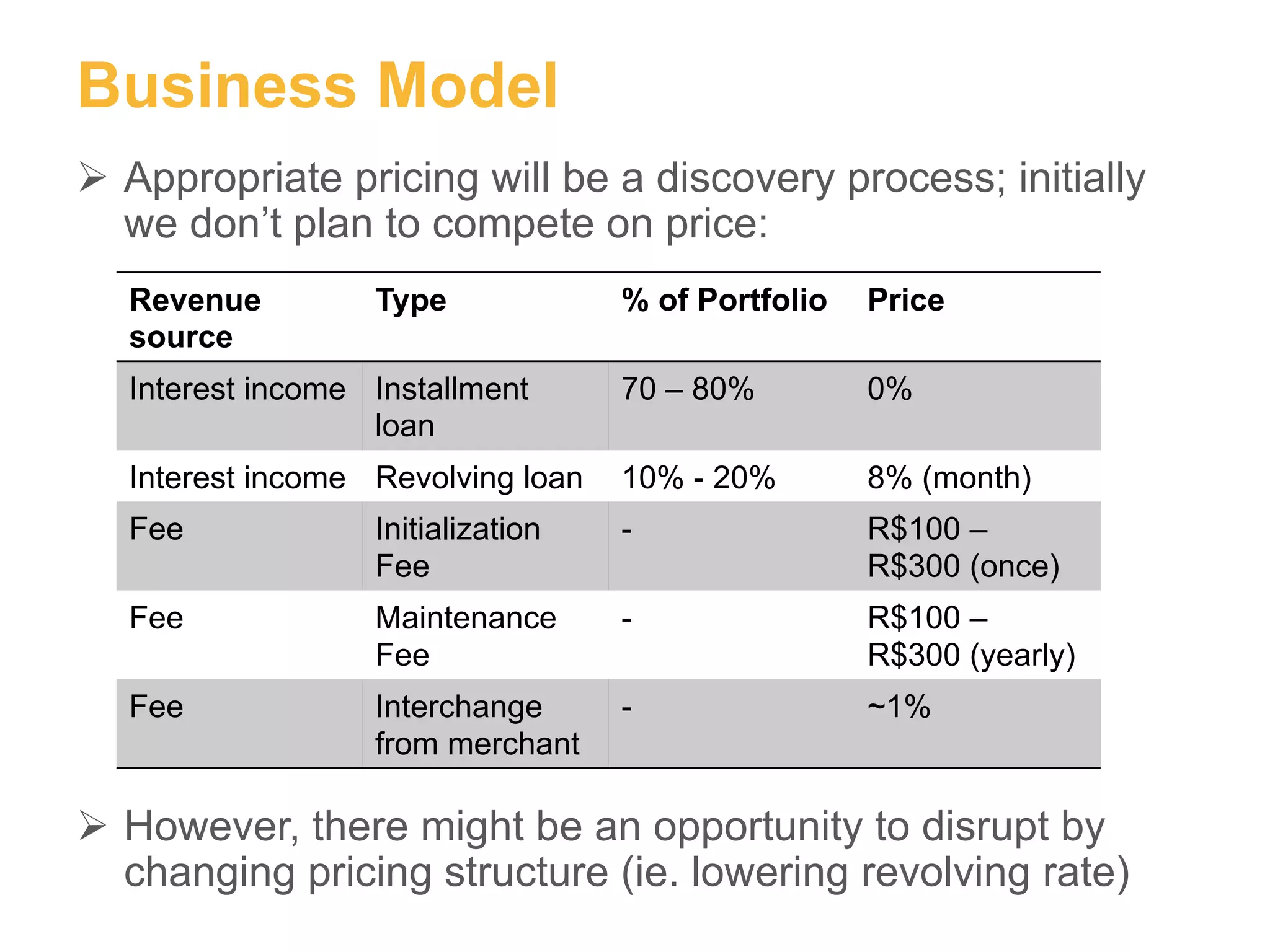
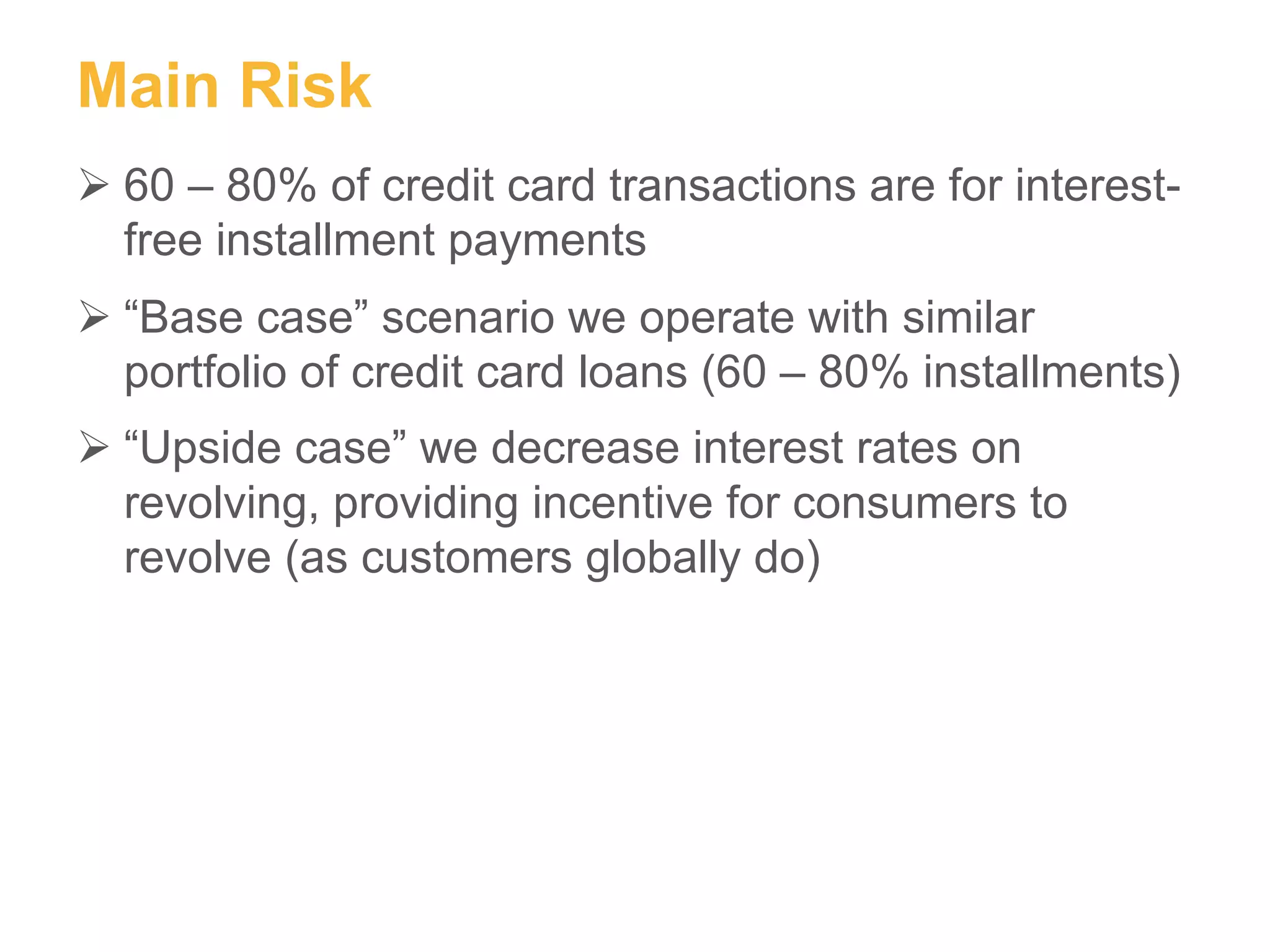
The business model slide presents a pragmatic revenue mix: most volume comes from installment interest (70-80%), with revolving interest and service fees contributing additional streams. The use of a table to show revenue source, type, portfolio percentage and price makes unit economics and pricing intentions explicit. The slide also notes a strategic choice not to compete on price initially, indicating a focus on customer acquisition and product/experience.

Founders should take from this the value of clarity on monetization early in the deck. Even if numbers are approximations, showing where revenue will come from and the levers you can pull (pricing, mix) gives investors something concrete to underwrite and stress-test.

Key Takeaway: Be explicit about revenue sources and composition; a simple table of monetization makes your assumptions easy to evaluate.
Inception and ask: early team and execution plan

Inception and ask: early team and execution plan

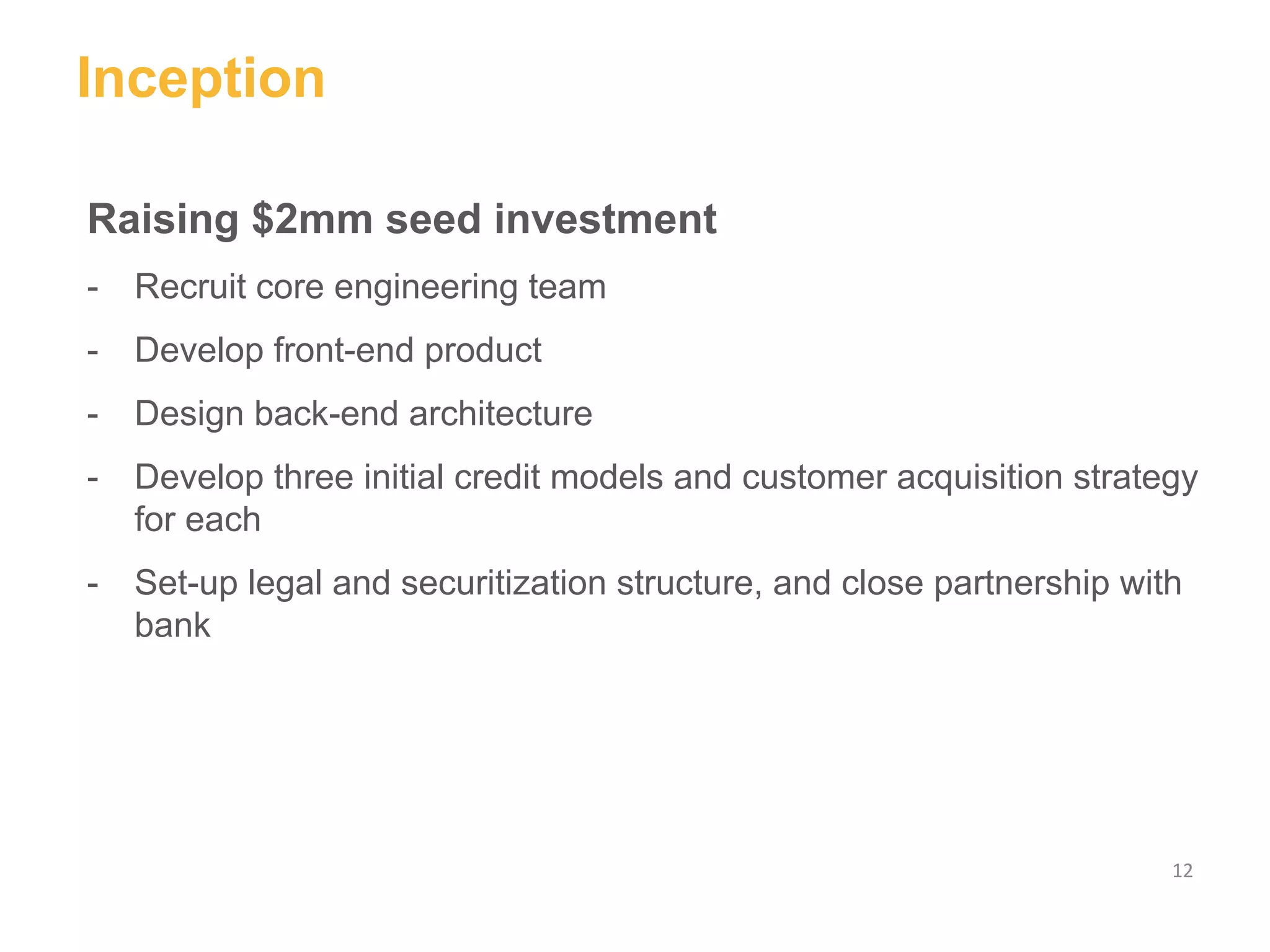
The inception slide is an operational ask: raising $2M to recruit an engineering team, build front-end and back-end architecture, develop credit models, and set up legal/securitization. This transitions the deck from strategy to execution and clarifies what the seed capital buys. It signals the founders understand the concrete milestones needed to de-risk the business.

Investors want to see that funding requests map to deliverables with measurable outputs. Founders should mirror this: link the raise to specific hires, development milestones and regulatory/legal steps. That creates accountability and makes follow-on financing or valuation growth more credible.

Key Takeaway: Map your funding ask to concrete milestones and hires so investors can see how capital directly reduces risk.

Conclusion: Key Lessons

Nubank's early deck succeeds by combining a crisp brand identity, a clear articulation of why incumbents are vulnerable, and practical operational details that show how the company will execute. The best parts are the side-by-side messaging (technology and brand), the timing narrative anchored in macro and tech shifts, and the explicit funding-to-milestone ask. For founders, the actionable advice is to be simultaneously visionary and granular: lead with a memorable positioning, justify it with trend-driven timing, prove defensibility with technical and data plans, and close with a concrete use of funds tied to measurable milestones.

When you build your own pitch deck, emulate Nubank by keeping slides visually simple, using structured comparisons to highlight advantages, and presenting monetization and execution in tables or lists investors can quickly model. Avoid vague promises; instead, map capital to hires, product features and regulatory steps so your narrative converts directly into an investment case.