Stack up against Zoom

Compare Your Deck

Zoom's 2014 Pitch Deck

SaaS
Stage: Series B
Raised: $30M
Year: 2014
Slides: 11
Outcome: IPO at $16B valuation

Pitch Deck

1 / 11
Slide 1
Click to expand

Deck Analysis

This deck presents "Zoom," an interactive mobile shopping product aimed at active, sports-oriented consumers. The slides blend physical retail context, a clear brand identity, and mobile UX mockups with market sizing, revenue partners, and competitive landscape. It is notable for marrying a tangible retail problem (overwhelming product choice in big-box stores) with a simple mobile interaction model and early go-to-market partnerships — a focused narrative that likely helped secure Series B funding and accelerate product-market fit.

Establishing the Problem: Retail Overload and Physical Context

Establishing the Problem: Retail Overload and Physical Context

Slide 1 (store interior) visually anchors the deck in a real-world problem: large, multi-brand sporting goods stores are crowded with inventory and options. Using a single panoramic photo of a big-box sporting retail environment communicates at a glance the friction Zoom intends to address — discovery and decision-making in physical retail. This is an effective opening because it requires no text to communicate the pain point; viewers instantly understand the customer's context.

Founders can learn how powerful context-setting images can be. Rather than launching immediately into numbers or product screenshots, the deck shows where the customer is and what they experience. This approach builds empathy and makes subsequent product slides feel like a natural solution rather than a disconnected demo.

Key Takeaway: Lead with a clear, relatable depiction of the customer's environment to make the problem immediately intuitive and emotionally resonant.
Brand Clarity: Simple Logo and Tagline

Brand Clarity: Simple Logo and Tagline

Slide 3 shows the Zoom logo and the tagline ‘Interactive shopping for active people,’ communicating brand and value proposition in one frame. The visual simplicity and the emphasis on the word "active" position the product for a defined demographic (fitness/sports shoppers). This clarity helps investors and partners quickly categorize the company and its focus.

For founders, keeping brand and tagline concise is instructive: a tight brand promise reduces ambiguity. This slide effectively primes the audience for the follow-on product screens and market slides, making the narrative cohesive and anchored to a distinct target user.

Key Takeaway: Use a single-slide brand statement to crystallize your target customer and core promise before diving into features or metrics.
Product Demo: Mobile-first Browsing and Simple Actions

Product Demo: Mobile-first Browsing and Simple Actions

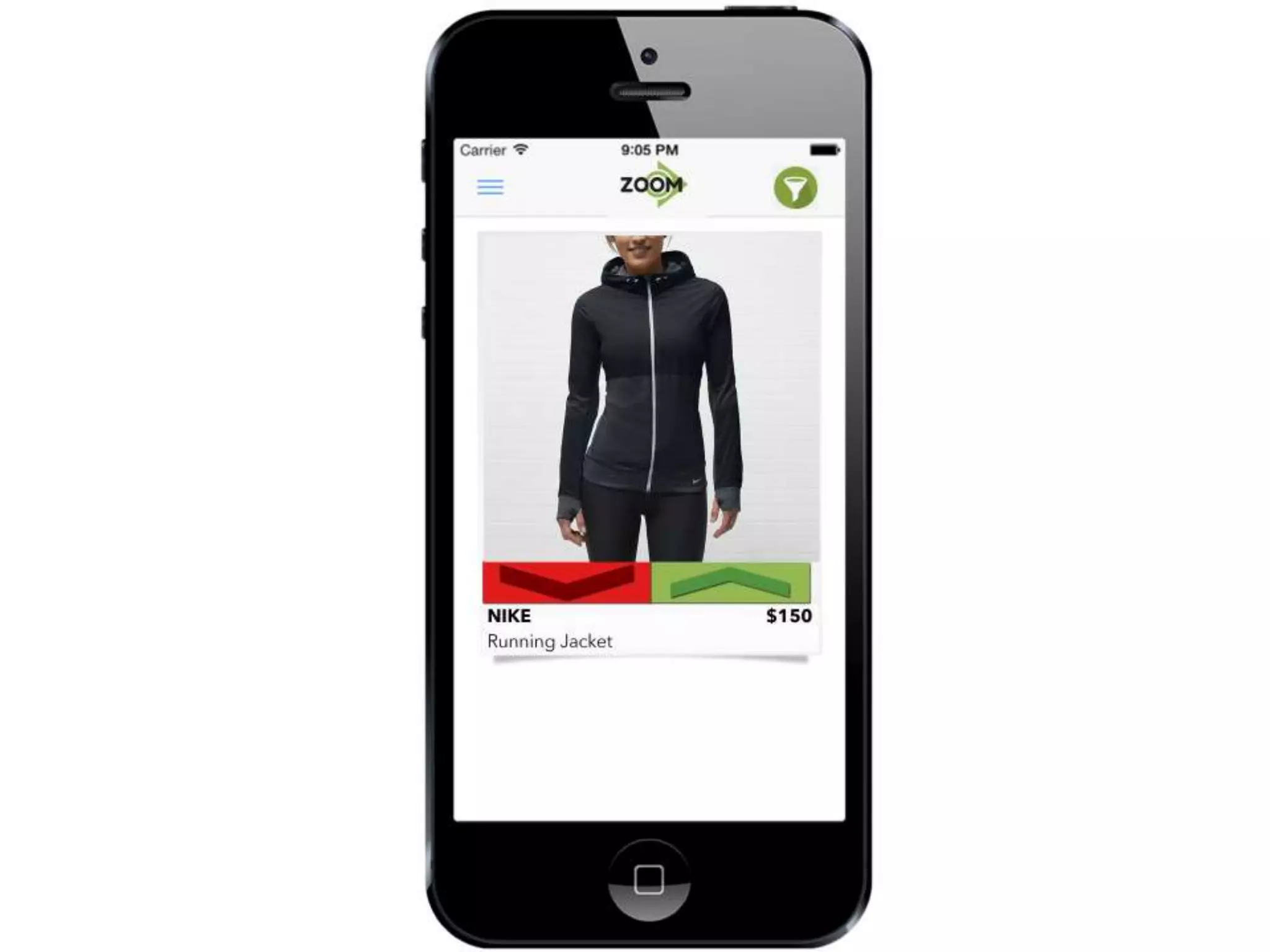
Slide 4 presents a product mockup showing a large product image, brand, price and two bold actions (red/green swipe affordances). The design suggests rapid decision-making (like/dislike) and prioritizes visual product discovery — appropriate for shoppers scanning apparel. The mockup communicates both the interaction model and the emotional experience (fast, confident choices) without a long textual explanation.

This slide is a good example of showing rather than telling. Founders should surface the core micro-interaction that defines product value (in this case, quick visual preference signals) early. It also demonstrates how a single-screen mockup can communicate business intent (curation + conversion) more quickly than a feature list.

Key Takeaway: Highlight the core micro-interaction in a clean mockup to make product value obvious and memorable.
Personalization & Retention: Profiles and Preferences

Personalization & Retention: Profiles and Preferences

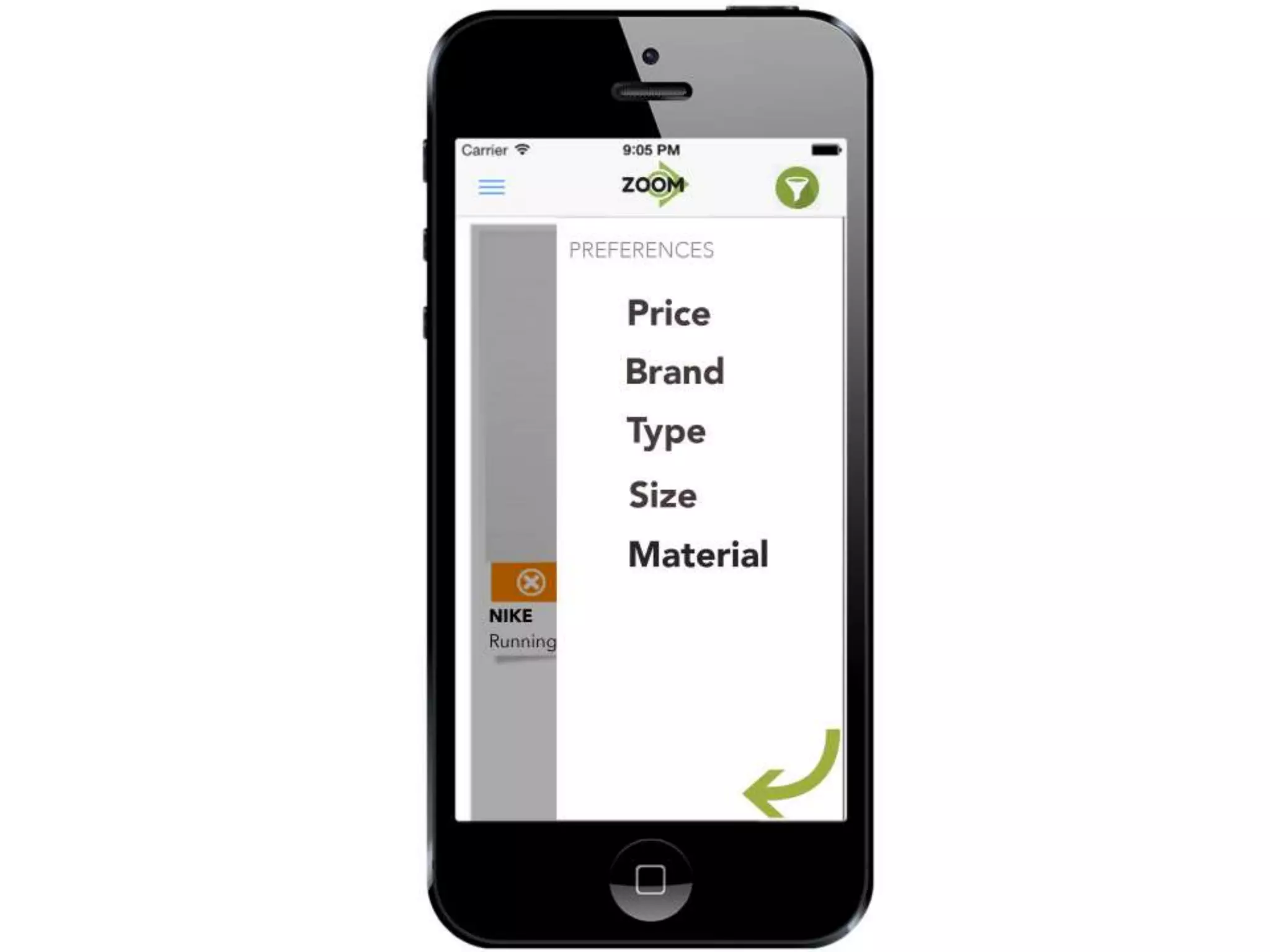
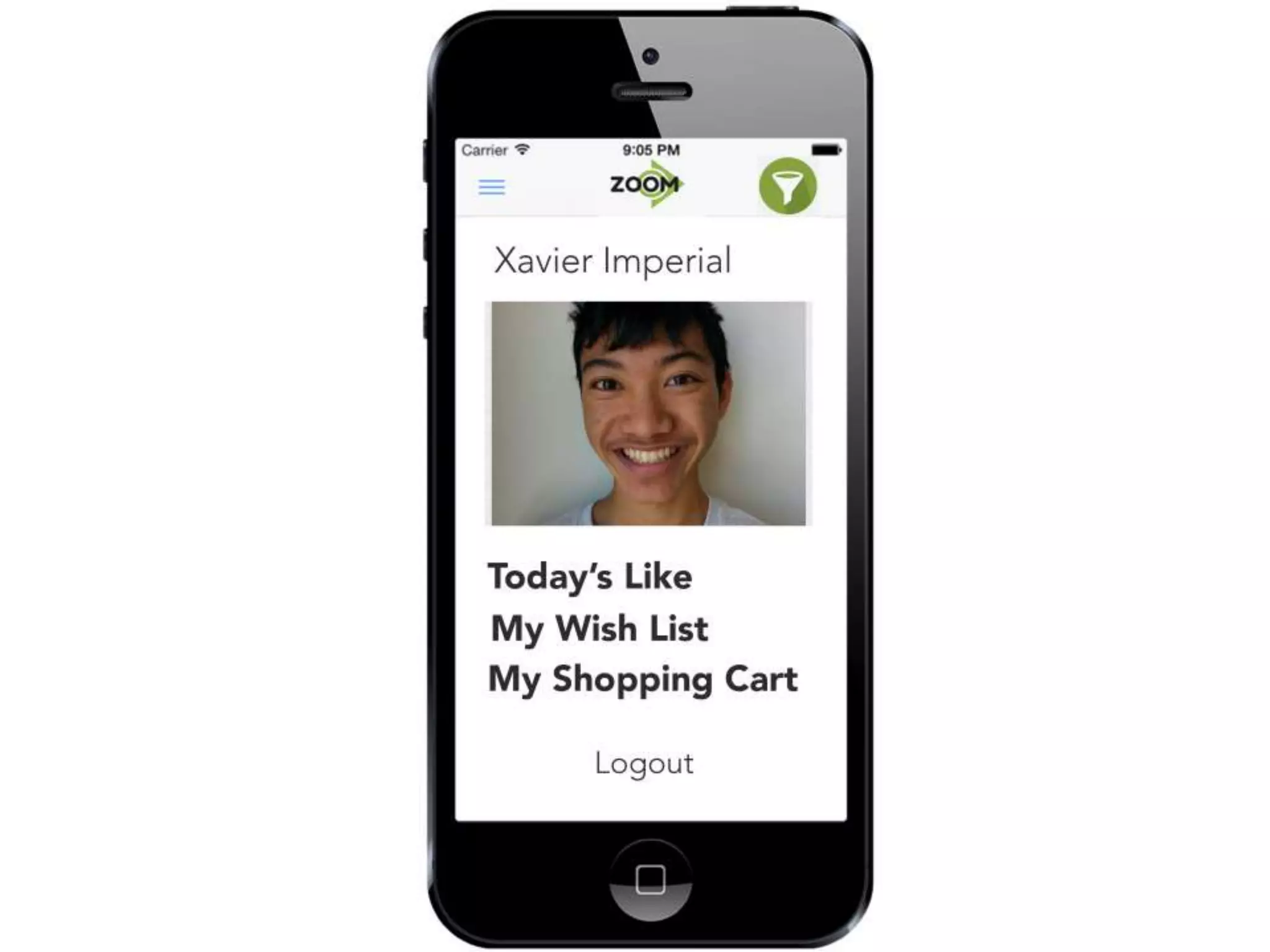
Slides 5 and 6 (profile and preferences screens) show user identity, saved lists, and a filter-driven preferences pane (price, brand, type, size, material). These screens articulate the product's ability to personalize discovery and re-engage users via saved preferences and lists. By including both social/personal elements (profile image, name) and structured preferences, the deck signals a roadmap toward retention and data-driven recommendations.

Founders can take away how to present personalization as both a UX benefit and a business lever. These screens imply data capture (preferences + behavior) that could power improved matching and higher lifetime value. In investor conversations, pairing UX mockups with the implied data flow helps justify assumptions about retention and monetization.

Key Takeaway: Show how identity and structured preferences power personalization — this ties UX to retention and future data-driven monetization.
Go-to-Market & Monetization: Brand Partnerships

Go-to-Market & Monetization: Brand Partnerships

Slide 7 lists major apparel brands (The North Face, Adidas, Puma, Under Armour, Nike, Lululemon) under a 'Revenue: Affiliate Partnerships' heading. This communicates a pragmatic early revenue model: affiliate/referral fees through brand partnerships. By presenting recognizable partners, the deck signals the potential to monetize discovery without heavy inventory or logistical burden, which is attractive to investors because it shortens the path to revenue.

Founders should note how credibility is borrowed from established partners. If you can show logos of target partners or signed letters-of-intent, it reduces perceived execution risk. Also, explicitly tying UX (discovery and preference data) to a clear monetization channel (affiliate commissions, brand promotions) helps close the loop for investors on how usage becomes revenue.

Key Takeaway: Tie your UX to a simple, believable revenue mechanism and use partner logos to reduce perceived market risk.
Market Size & Growth Signals

Market Size & Growth Signals

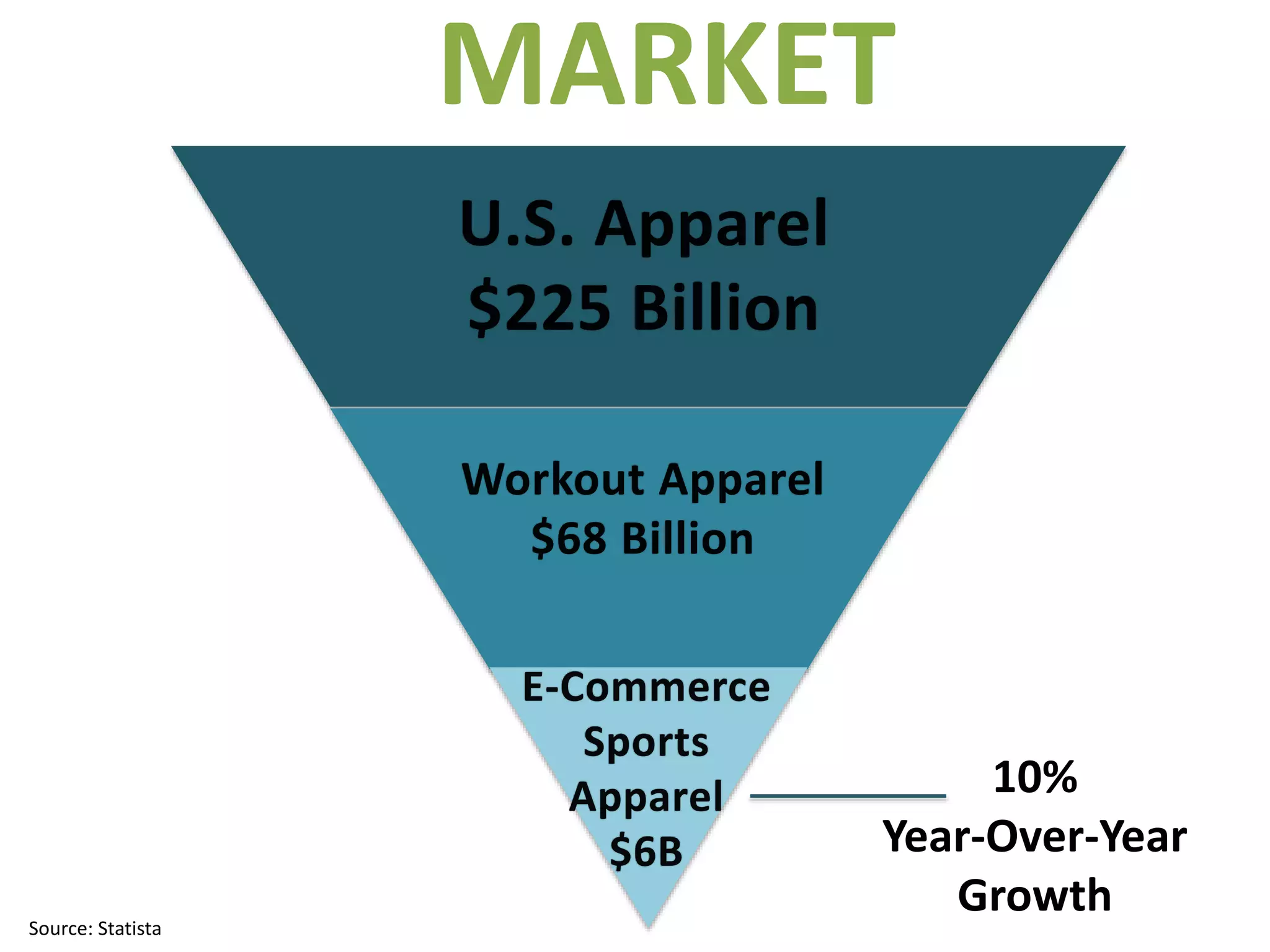
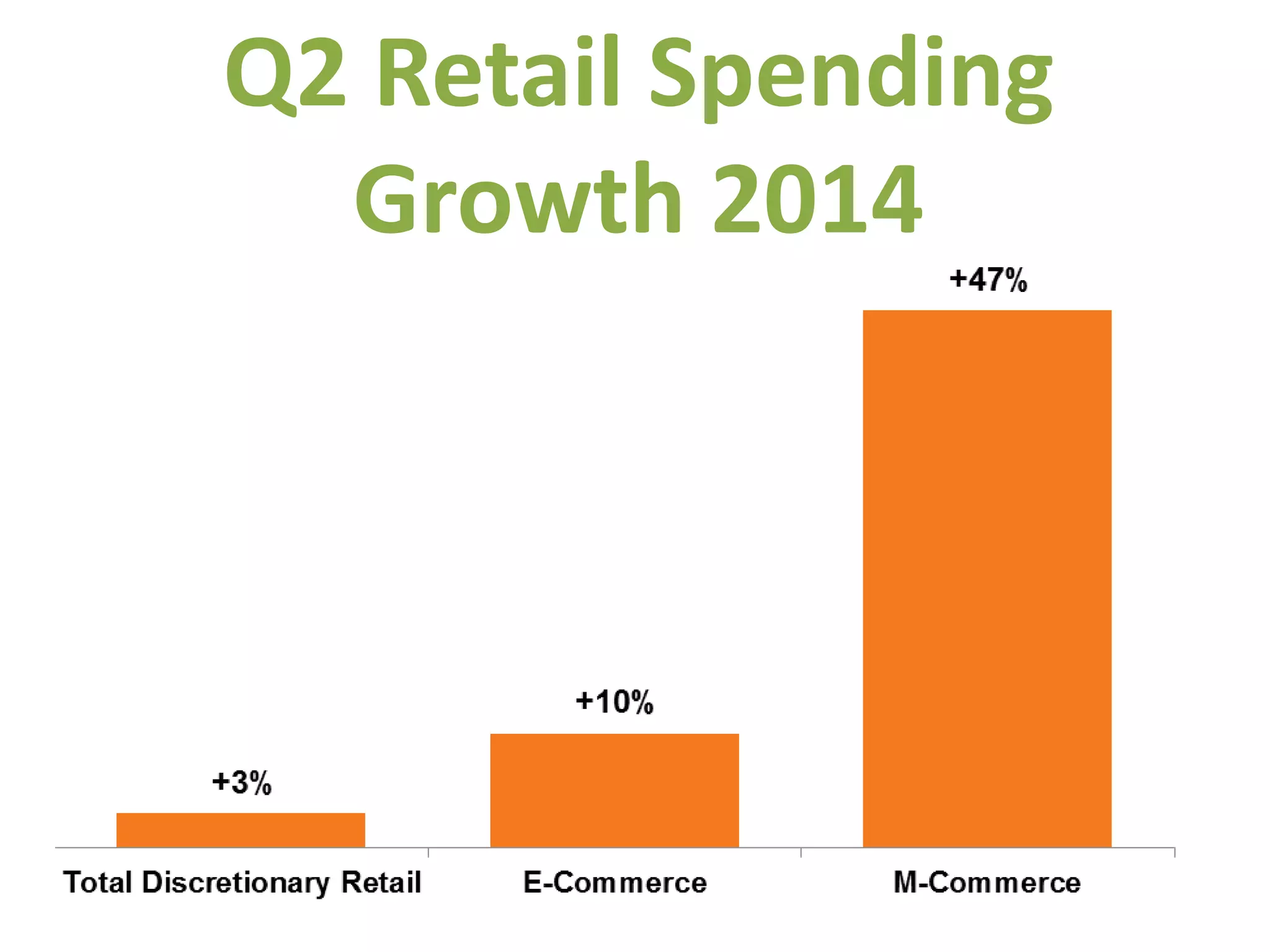
Slide 8 (market funnel) and Slide 9 (Q2 retail spending growth) together map a believable market opportunity: large U.S. apparel market -> workout apparel -> e-commerce sports apparel, with cited growth rates and a 10% year-over-year e-commerce segment growth. The inverted pyramid visual clarifies the addressable segments and narrows down to a realistic e-commerce niche. The adjacent growth chart highlights the disproportionate expansion of mobile commerce (M-commerce), reinforcing why a mobile-first product is timely.

For founders, this is a reminder to present market sizing hierarchically (total market -> niche -> addressable) and to include current growth dynamics that validate product timing. Using an industry source (Statista) and breaking the market into layers helps investors model penetration scenarios that underpin financial projections.

Key Takeaway: Use a layered market funnel plus recent growth metrics to show both long-term scale and immediate timing advantages.
Competition & Differentiation

Competition & Differentiation

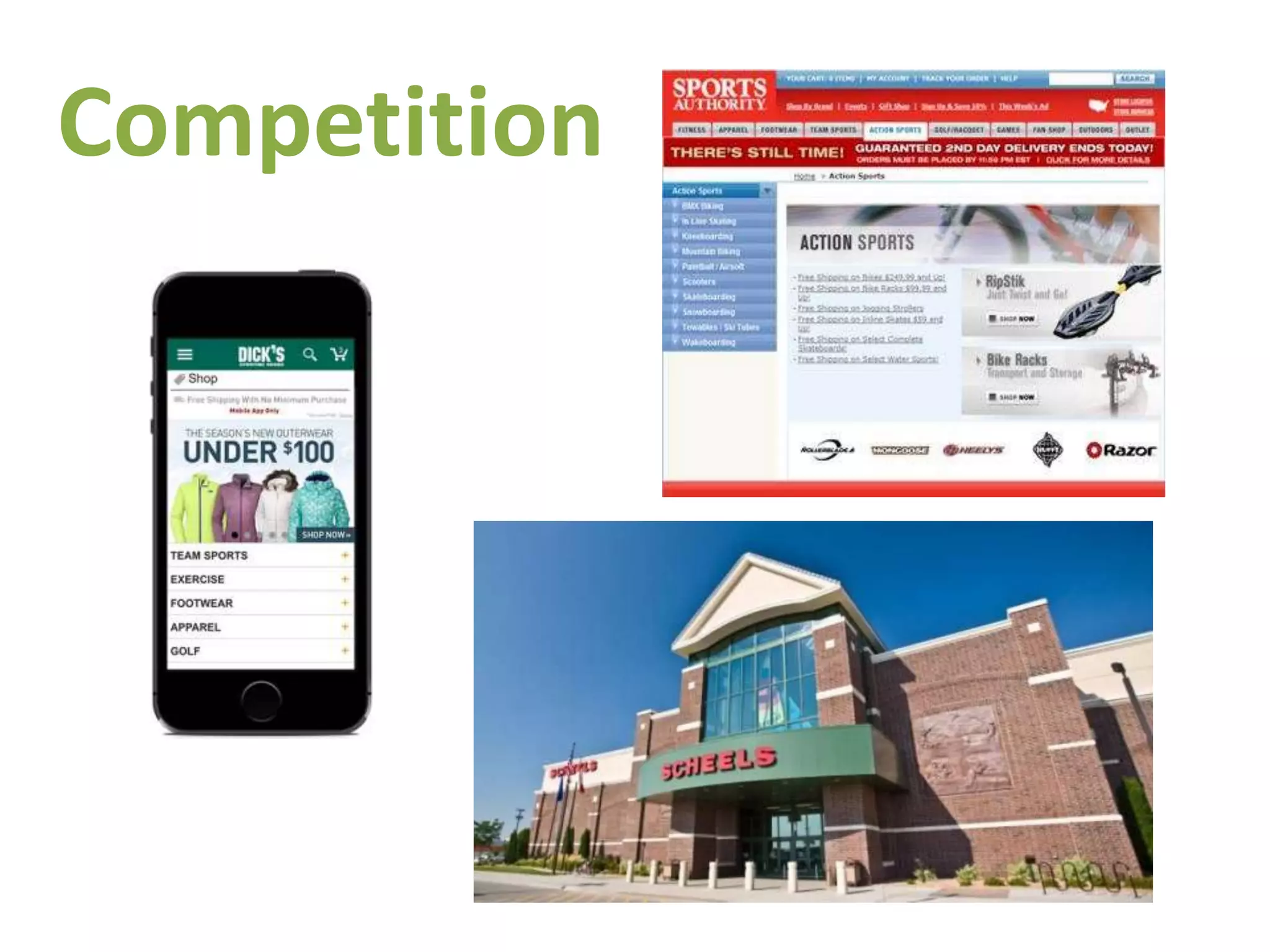
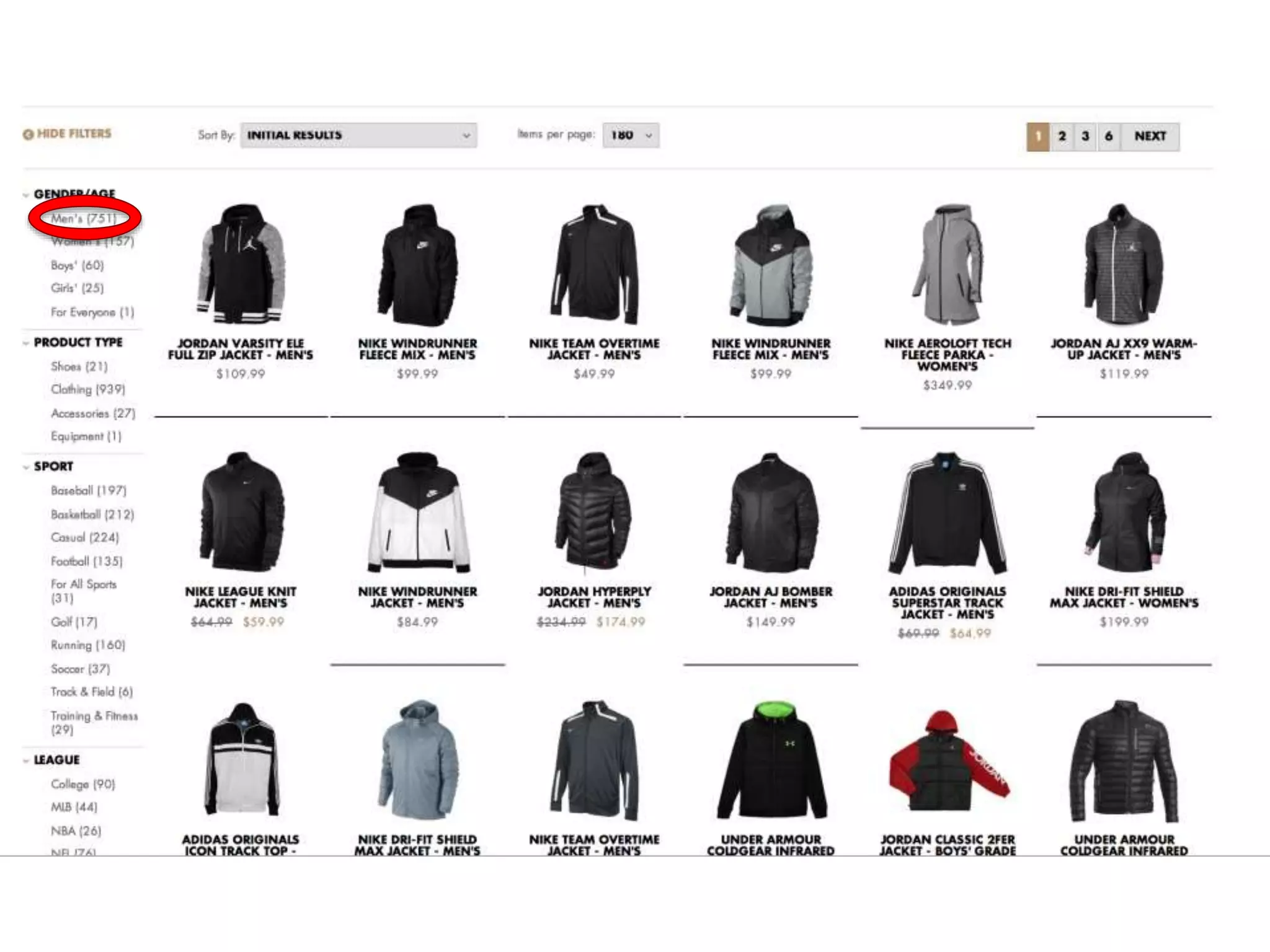
Slide 10 highlights competing channels: mobile apps and websites of large sporting retailers and brick-and-mortar specialty stores. By juxtaposing screenshots and a storefront photo, the deck clarifies that Zoom competes with both incumbent retailers' digital experiences and physical stores. The implicit claim is that Zoom's curated, preference-driven mobile discovery differentiates from retailers' catalog-like or search-first experiences.

Founders should emulate the clarity here: explicitly map where your product sits relative to incumbents and show how your UX or business model addresses gaps. It's also useful to acknowledge competitive strengths (scale of incumbents) while explaining defensible ways to capture niche value (better personalization, affiliate partnerships, lower capital requirements).

Key Takeaway: Map direct and indirect competitors visually and state how your UX and go-to-market fill specific gaps they leave open.

Conclusion: Key Lessons

This deck balances storytelling, product, market, and monetization in a compact, visual way. Strengths include strong context-setting imagery, a clear brand promise, focused product micro-interactions, and pragmatic early monetization through affiliate partnerships. The market slides anchor opportunity with layered sizing and growth signals while the competition slide candidly positions the product against incumbents.

Actionable advice for founders: open with the customer's physical or emotional context, present one clear product interaction that drives value, link UX to a simple revenue model, and show realistic market sizing and competitive positioning. Finally, use recognizable partner logos or committed pilots to lower execution risk in the eyes of investors.