Stack up against Uber

Compare Your Deck

Uber's 2008 Pitch Deck

Marketplace
Stage: Seed
Raised: $200K
Year: 2008
Slides: 25
Outcome: IPO at $75B valuation

Pitch Deck

1 / 25
Slide 1
Click to expand

Deck Analysis

This deck is Uber's 2008 seed pitch that crisply frames a large, inefficient taxi market and presents a technology-driven on-demand premium car service as the solution. It stands out for tightly linking a clear customer pain (slow, unreliable hailing and expensive medallions) to a simple product concept (one-click, members-only car requests) and a concrete path to execution (apps, dispatch tech, fleet plans). The presentation is notable for being straightforward, operationally focused, and for demonstrating early traction and a realistic roadmap rather than an overambitious, speculative narrative.

The Opening: Simple positioning and immediate value prop

The Opening: Simple positioning and immediate value prop

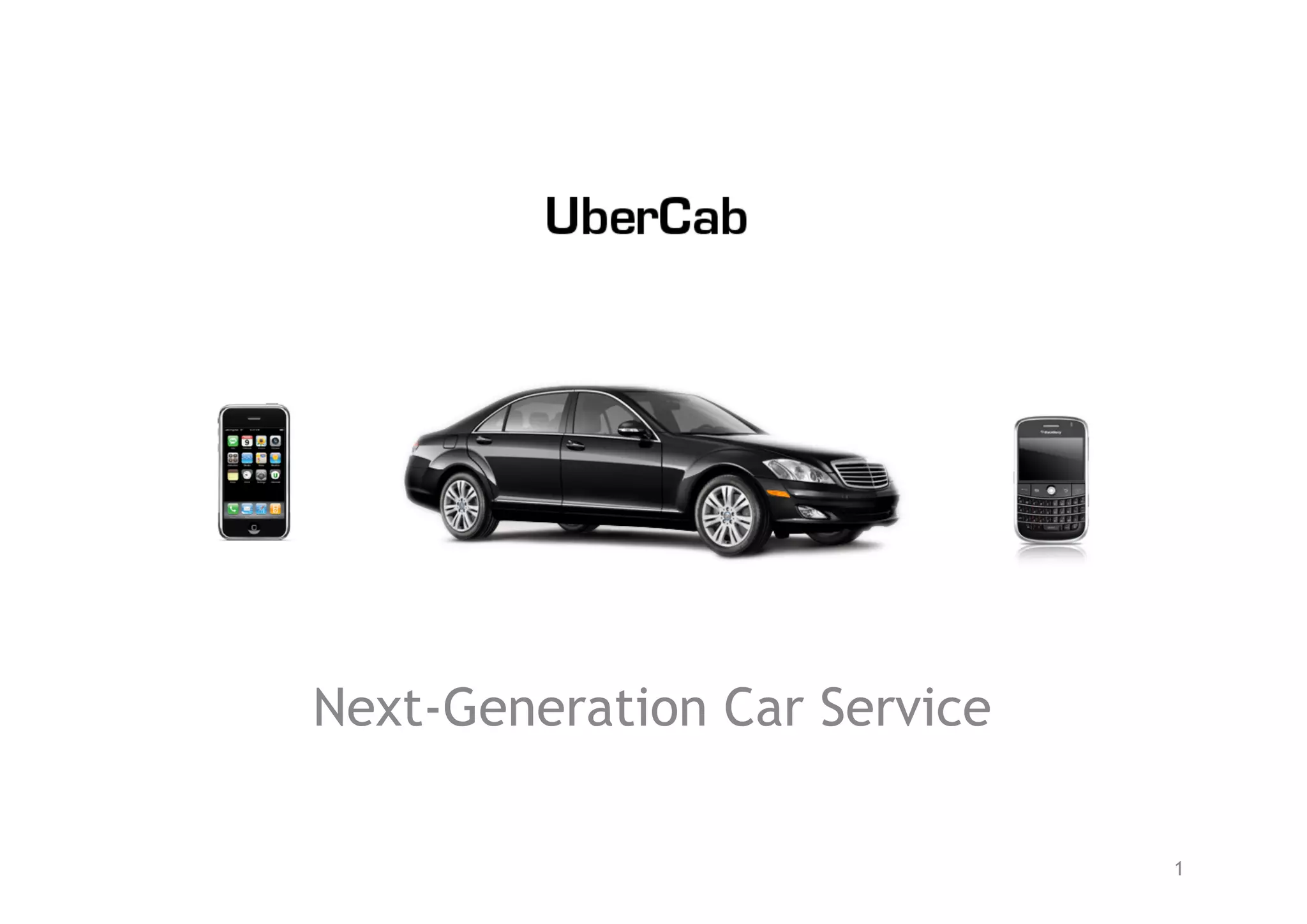
Slide 1 establishes the brand and the single-line value proposition: 'Next-Generation Car Service.' The visual is minimal — a sleek car and phones — which reinforces a premium, tech-enabled transportation experience. This directness makes the product easy to grasp instantly for investors: premium cars + mobile technology = better car service.

What founders can learn: start with a concise, memorable positioning that ties product, channel, and benefit in one line. The slide avoids fluff and focuses attention on the central promise, which primes the audience for the problem and solution that follow.

Key Takeaway: Lead with a one-line value proposition and simple visuals that make the product and benefit obvious within seconds.
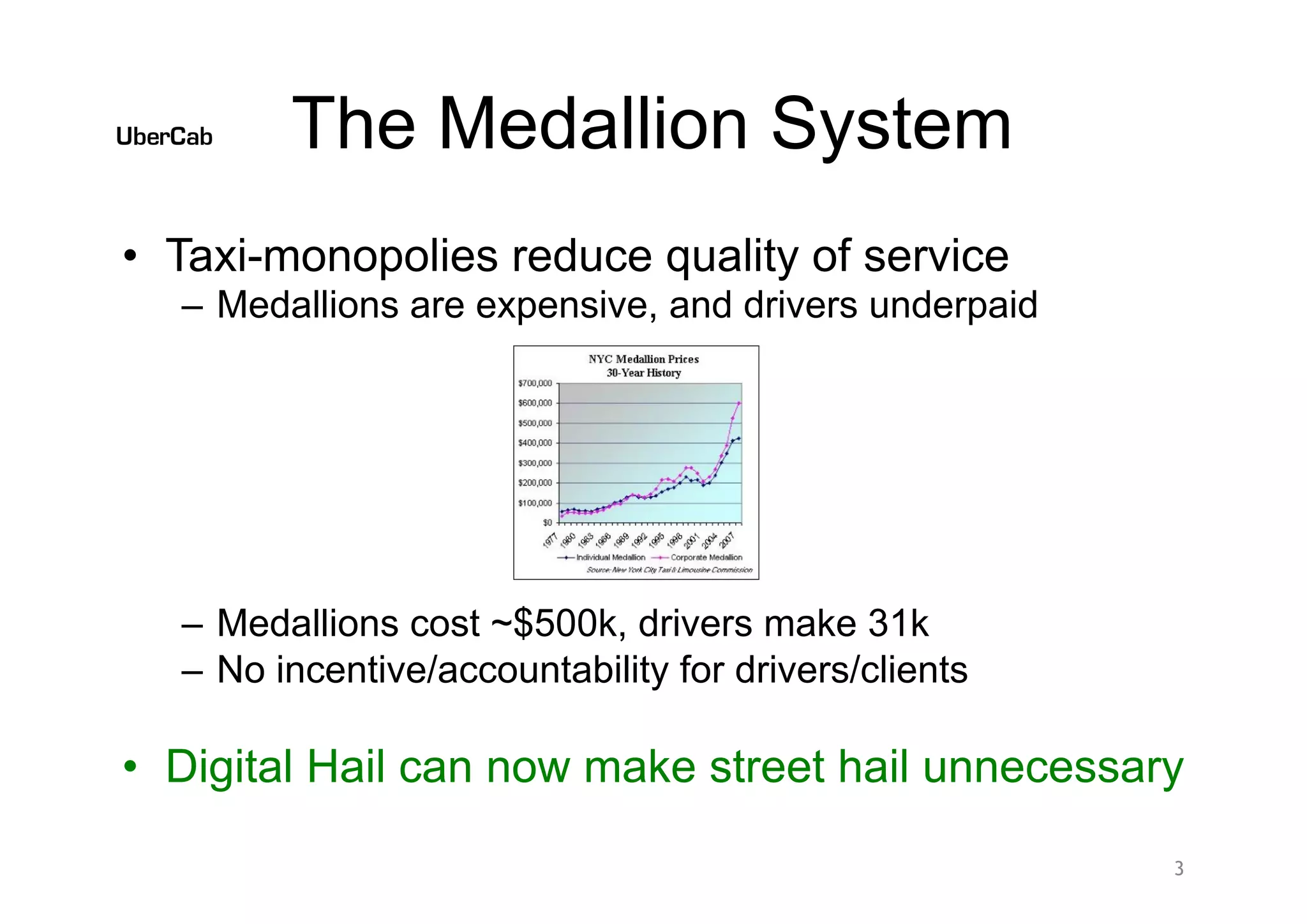
Problem Framing: Quantifying incumbent inefficiency (Medallion System)

Problem Framing: Quantifying incumbent inefficiency (Medallion System)

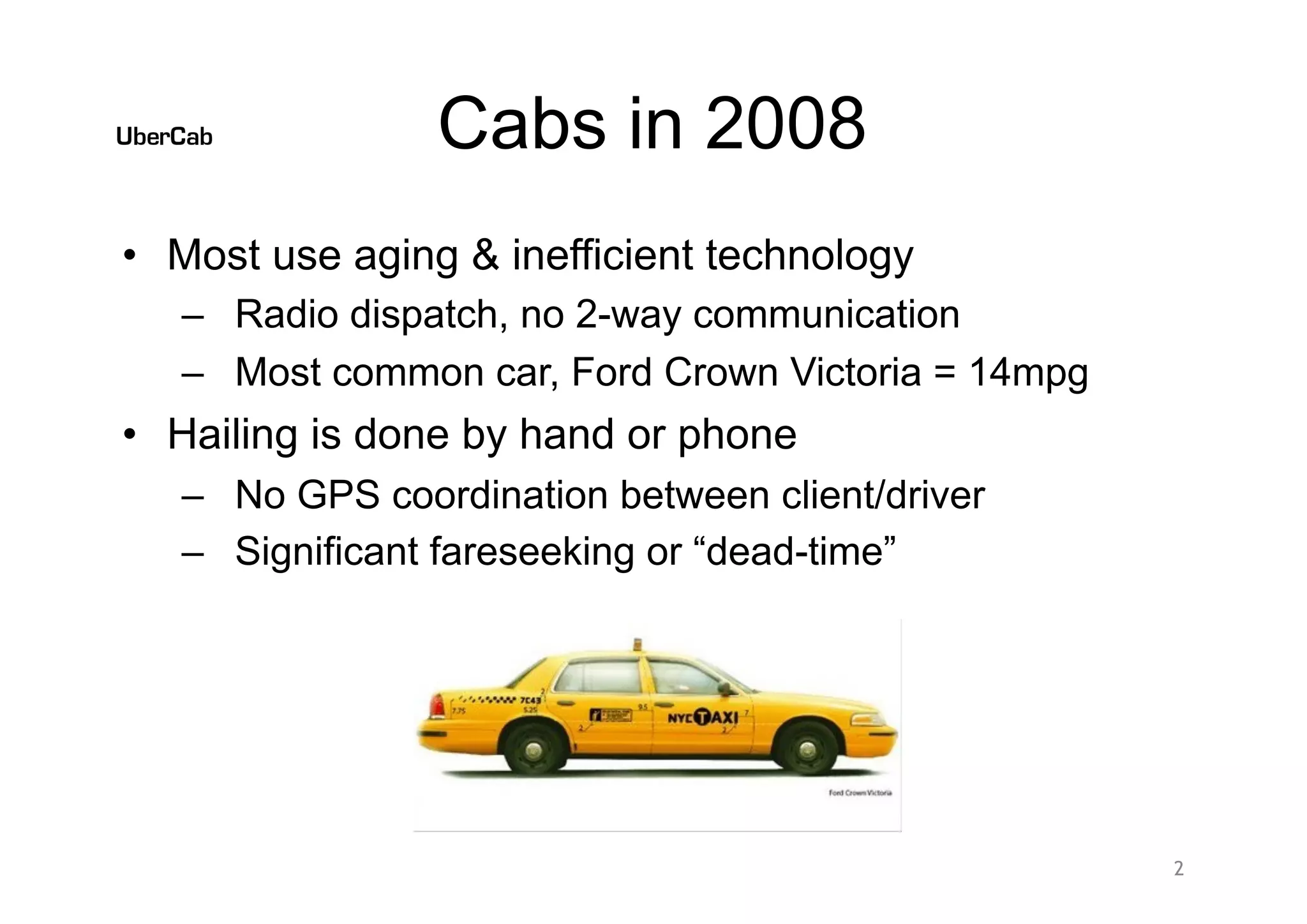
Slide 3 and related slides on market context detail how taxi monopolies, medallion costs, and inefficient dispatch lead to poor service and low driver compensation. The deck uses specific numbers — medallions costing ~$500k and drivers making ~$31k — to make the economic pain tangible. By explaining 'dead-time' and the lack of GPS coordination, the founders create a defensible rationale for why a technology layer can unlock value.

This is effective because it pairs an emotional customer pain (long waits, unreliable service) with hard economic constraints that technology can alter. Founders should emulate this approach: quantify the incumbent's fracture points (cost structures, regulation, operational inefficiencies) to show a clear opportunity for disruption and to justify a technical solution.

Key Takeaway: Use concrete numbers and operational failure points to turn a perceived inconvenience into a provable market opportunity.
Product Concept: Clear, differentiated offering (UberCab concept)

Product Concept: Clear, differentiated offering (UberCab concept)

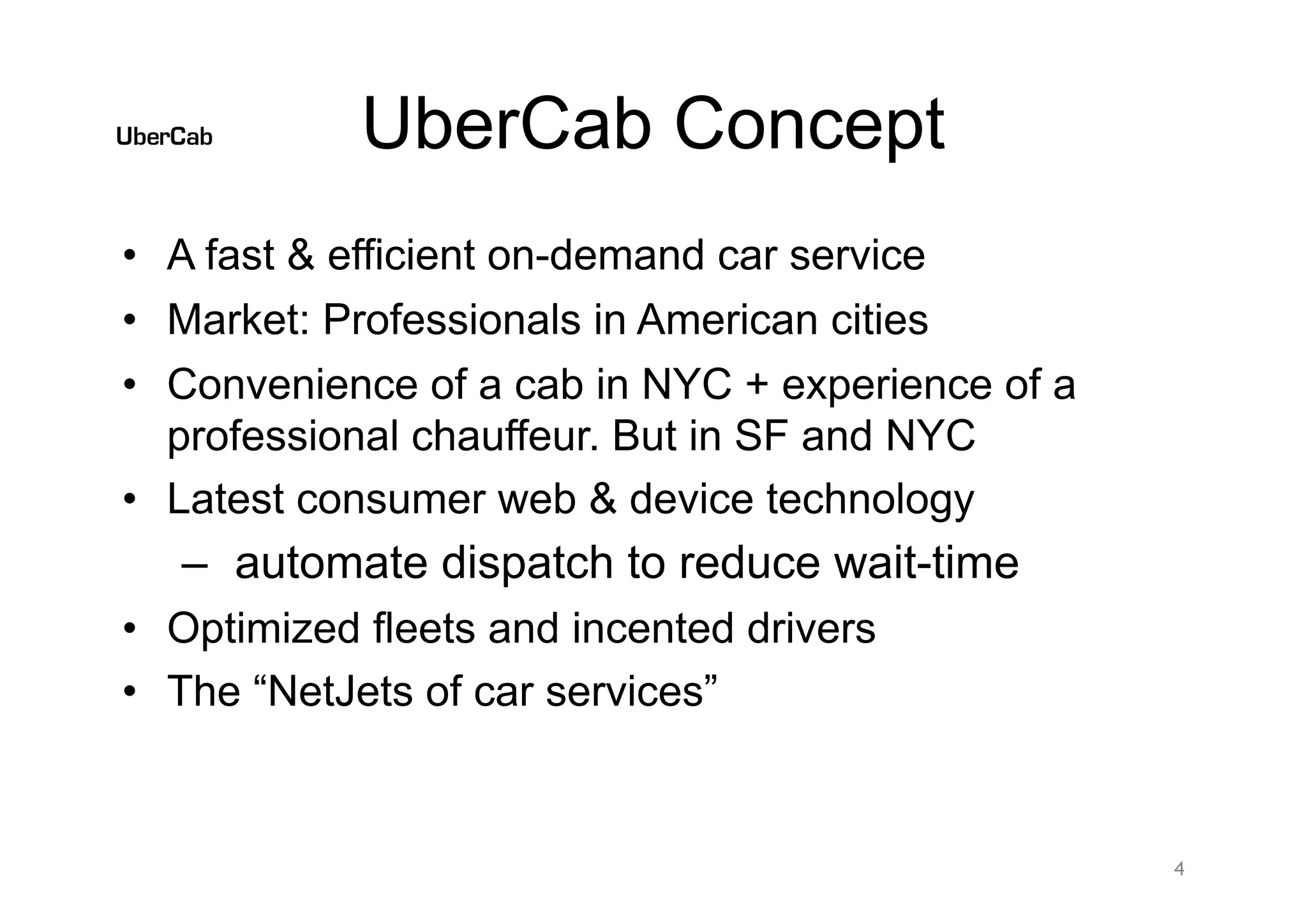
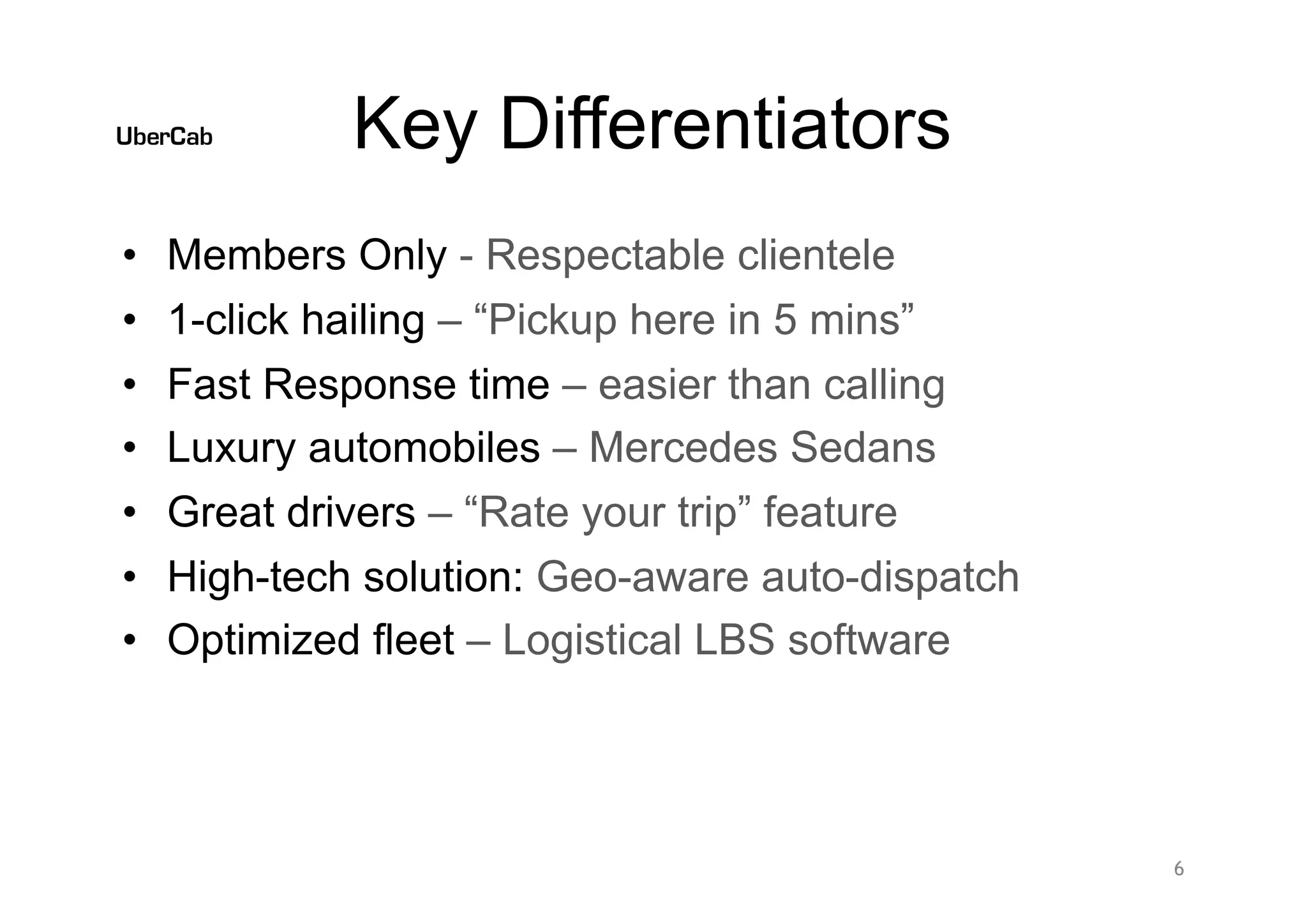
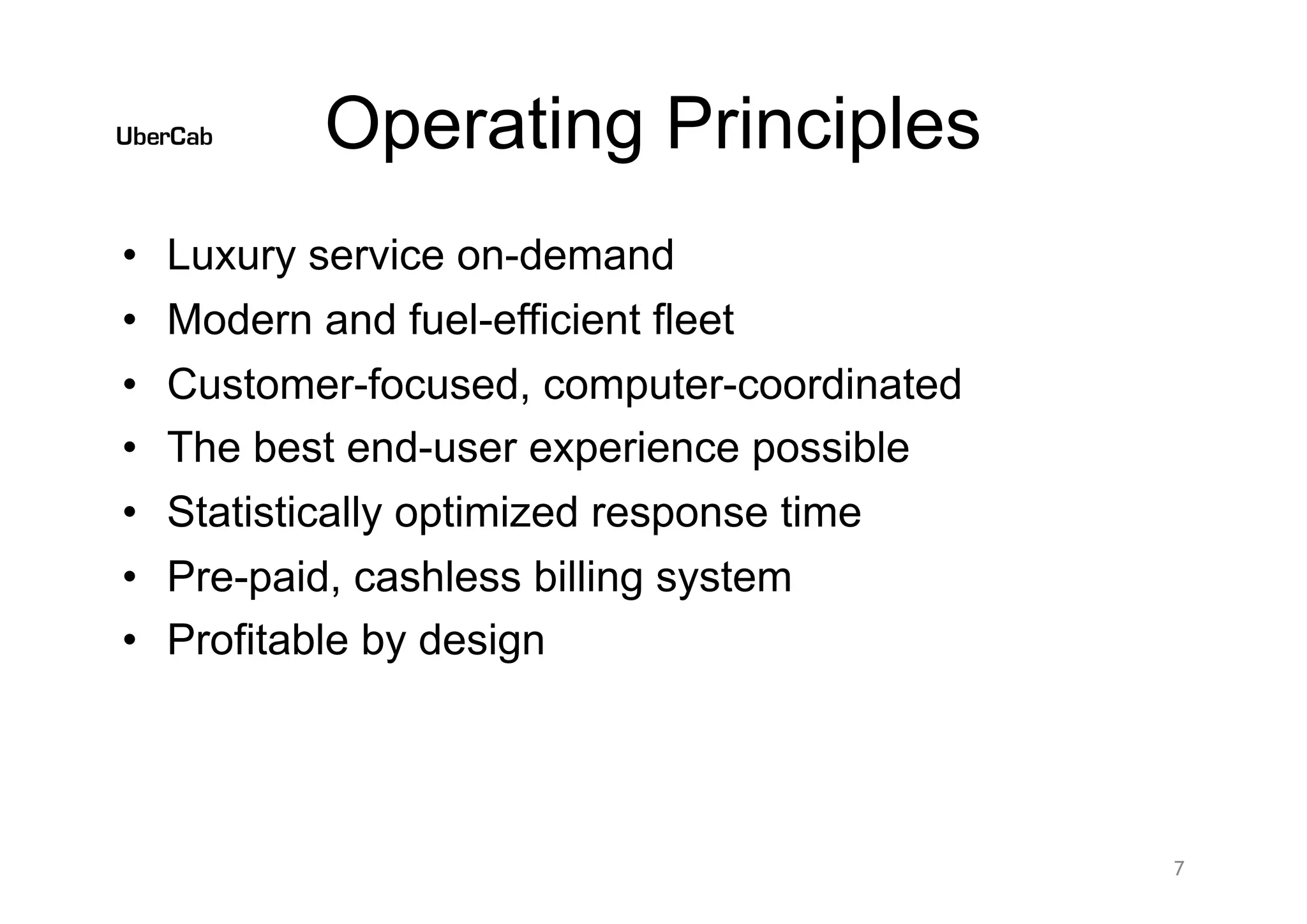
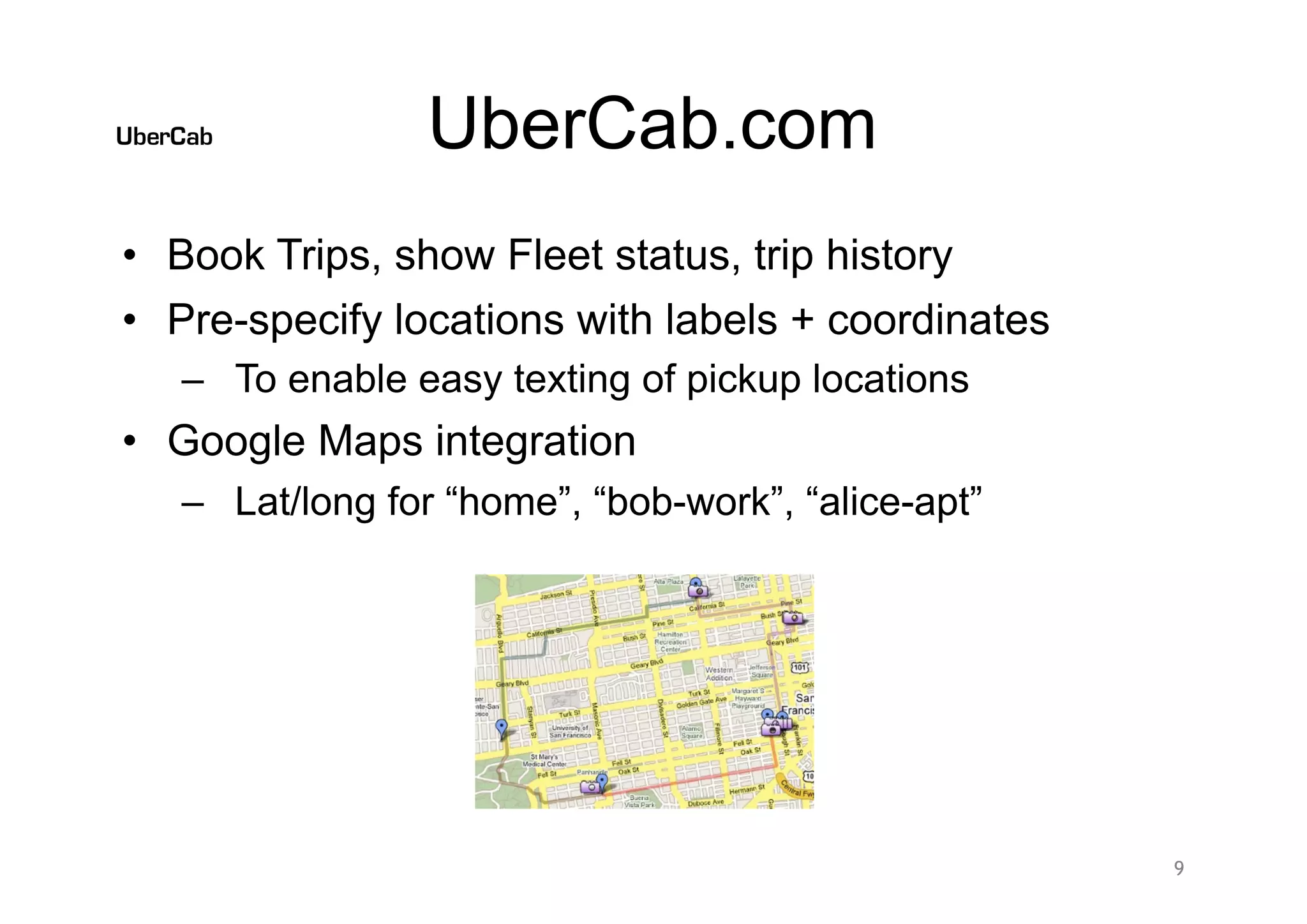
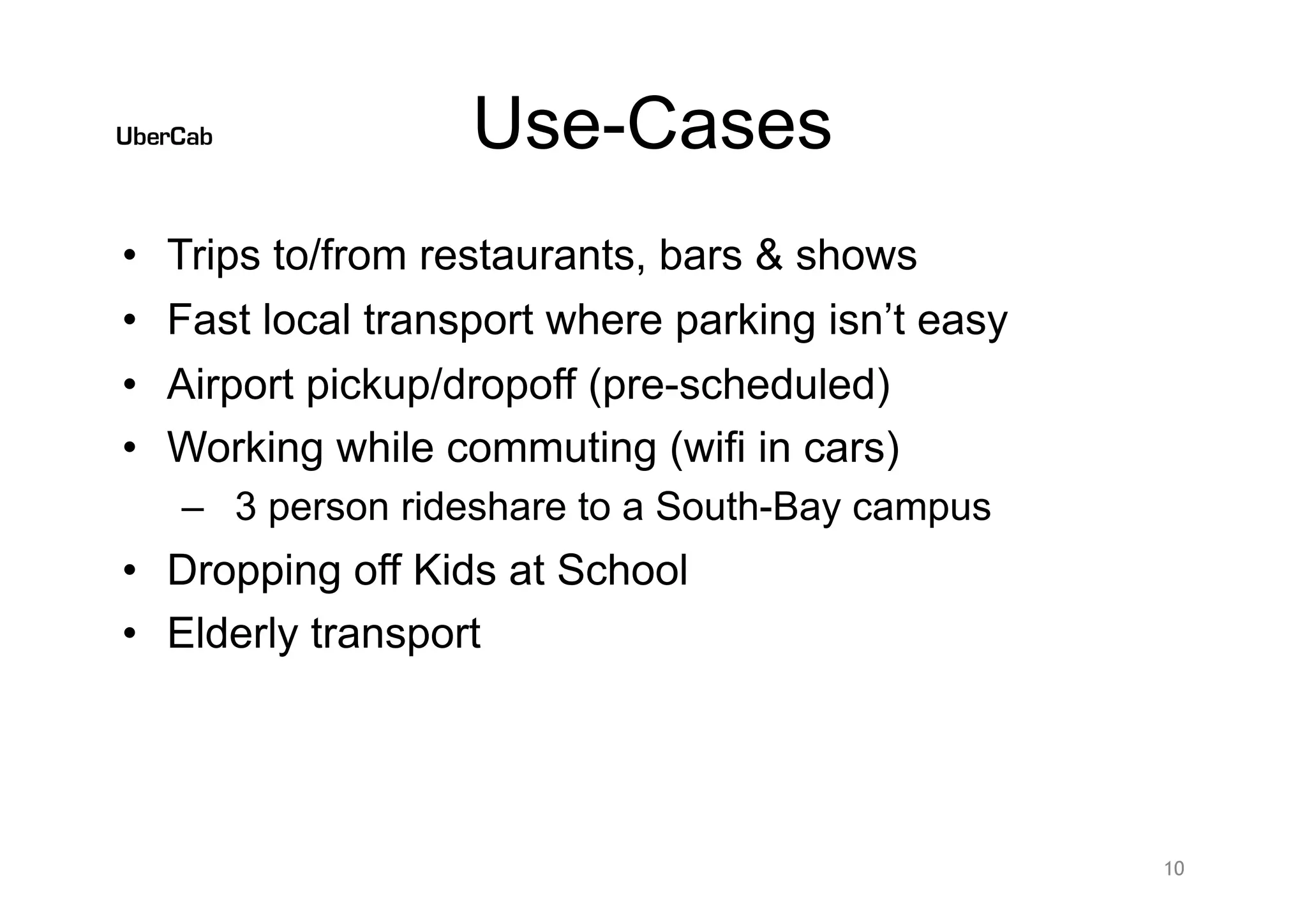
Slide 4 lays out the UberCab concept: on-demand, professional drivers, geo-aware dispatch, and optimized fleets. It balances customer-facing benefits (convenience, guaranteed pickup, luxury cars) with operational levers (automated dispatch, incented drivers). This dual focus — experience + operations — helps investors see not just demand but how the business will deliver reliably.

Founders can learn to craft product slides that explicitly map features to operational needs and market segments. Instead of listing features, Uber connects features to the customer problem and the unit economics that will enable scale (e.g., digital hail removes the need for medallions). That makes the product more investable because it answers both demand and delivery questions.

Key Takeaway: Describe the product by showing how features solve the customer's pain and how operations will sustain and scale the experience.
Go-to-Market & Business Model Design: Membership and guaranteed pickup

Go-to-Market & Business Model Design: Membership and guaranteed pickup

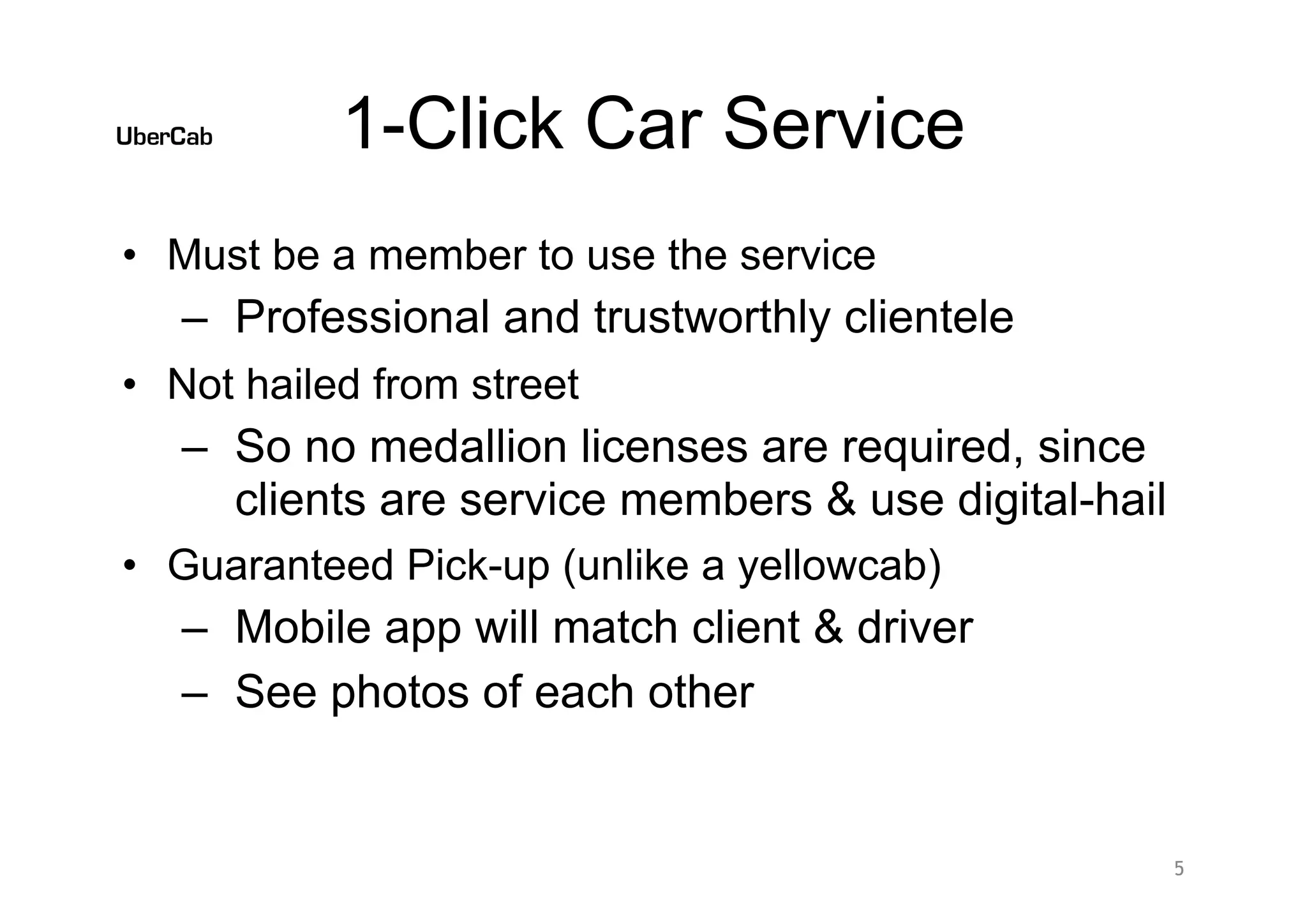
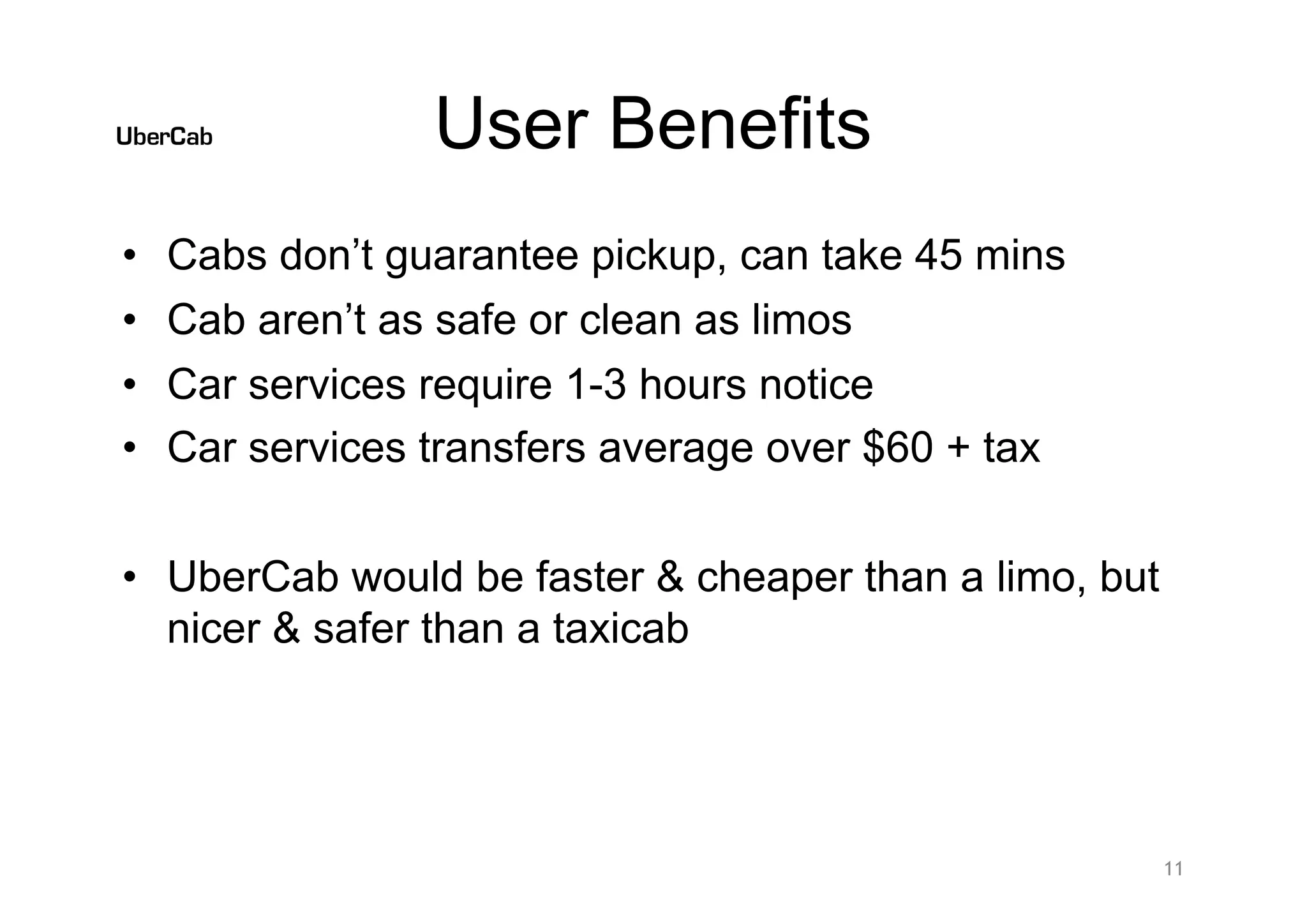
Slide 5 explains key go-to-market choices: members-only access, not hailed from the street (avoiding medallion constraints), and guaranteed pickups via mobile matching. These decisions simultaneously shape customer experience, regulatory exposure, and revenue mechanics. The membership model signals higher ARPU, curated clientele, and control over service quality — all persuasive to seed investors focused on defensibility.

This slide teaches founders to surface early business-model tradeoffs clearly. Pick rules (membership vs. marketplace access, pricing for immediacy, etc.) and explain how they move metrics (acquisition, retention, pricing power). The deck uses business-model choices to show a path to differentiation and unit-economics improvement.

Key Takeaway: Use explicit business-model rules (membership, guaranteed service) to demonstrate how you’ll capture value, control quality, and minimize regulatory friction.
Product Distribution: Mobile apps and multi-channel access

Product Distribution: Mobile apps and multi-channel access

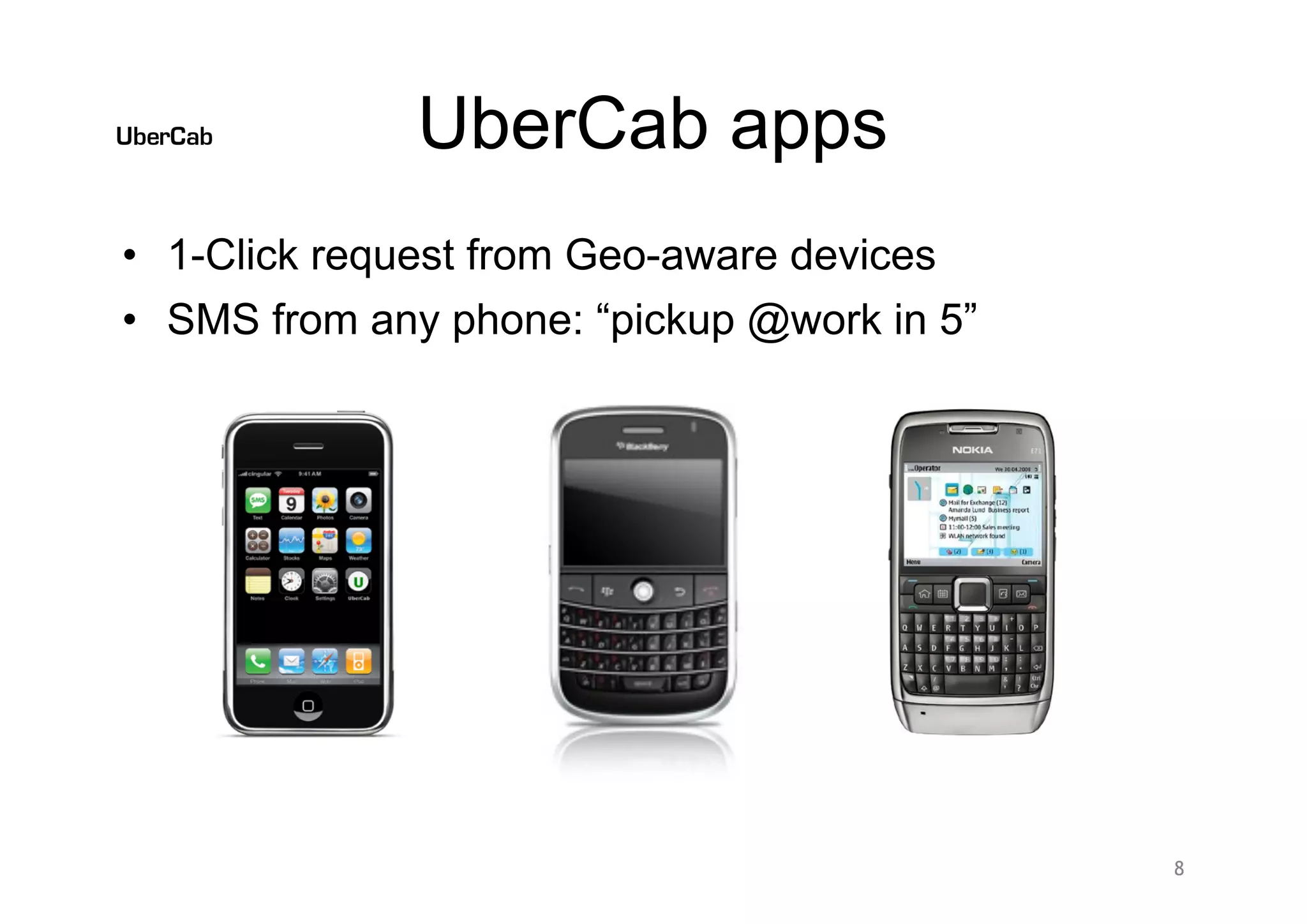
Slide 8 highlights the multi-device strategy — iPhone, BlackBerry, SMS — to make ordering accessible from any phone. In 2008 this signaled pragmatic product-market fit thinking: reach the devices your target customers already use. The slide also implies a low-friction order mechanism (1-click requests) and alternative SMS flow for non-smartphones, reducing dependence on any single platform.

Founders should ensure distribution plans are device- and user-behavior-informed. Describe not just the app but how customers will actually summon the product across the devices they carry. Early cross-platform coverage reduces friction and accelerates adoption in enterprise and consumer segments alike.

Key Takeaway: Design distribution to match user behavior across devices; support the simplest, lowest-friction paths first (e.g., SMS or single-click) to drive adoption.
Technology & Ops: Demand forecasting and geo-aware dispatch

Technology & Ops: Demand forecasting and geo-aware dispatch

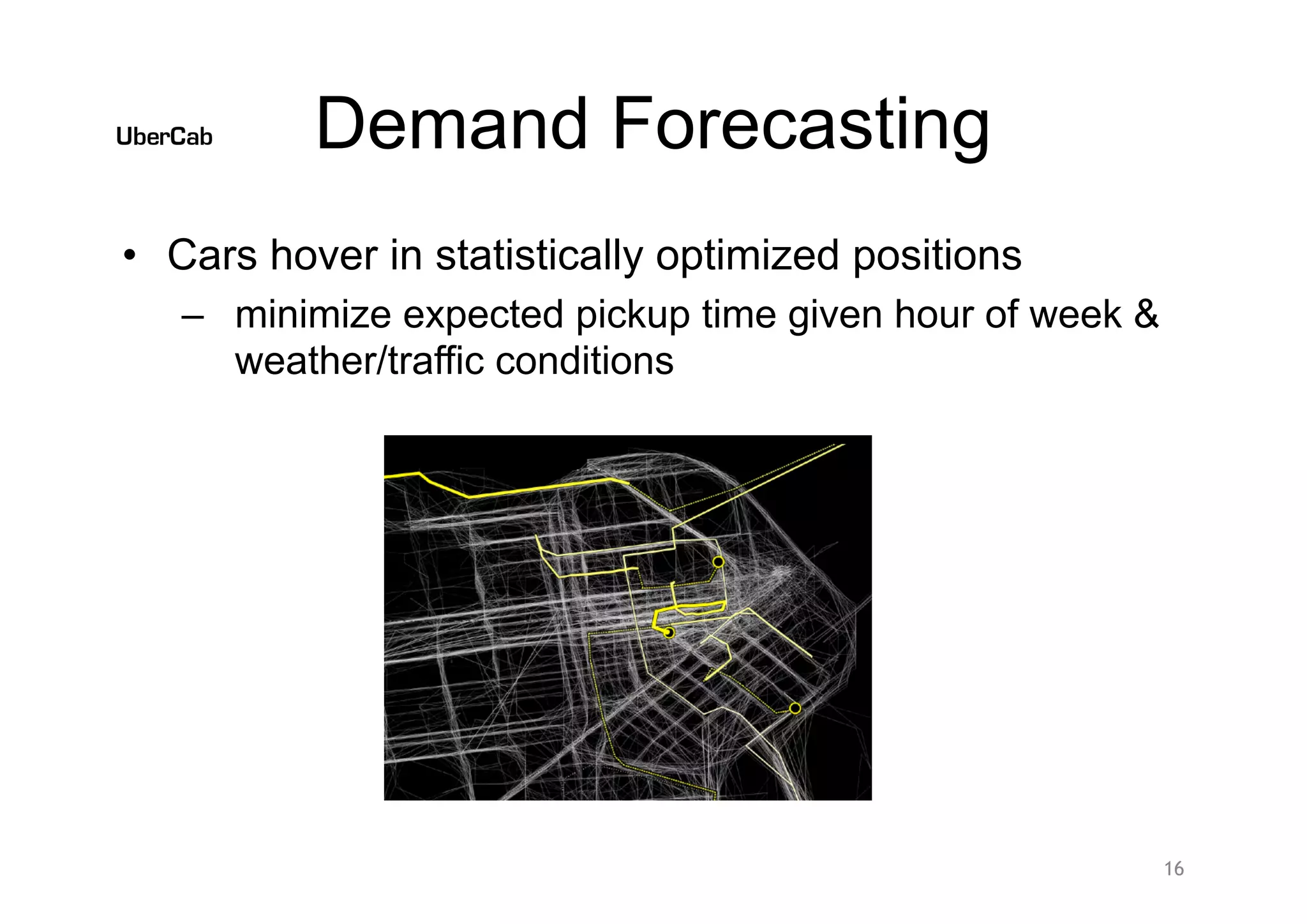
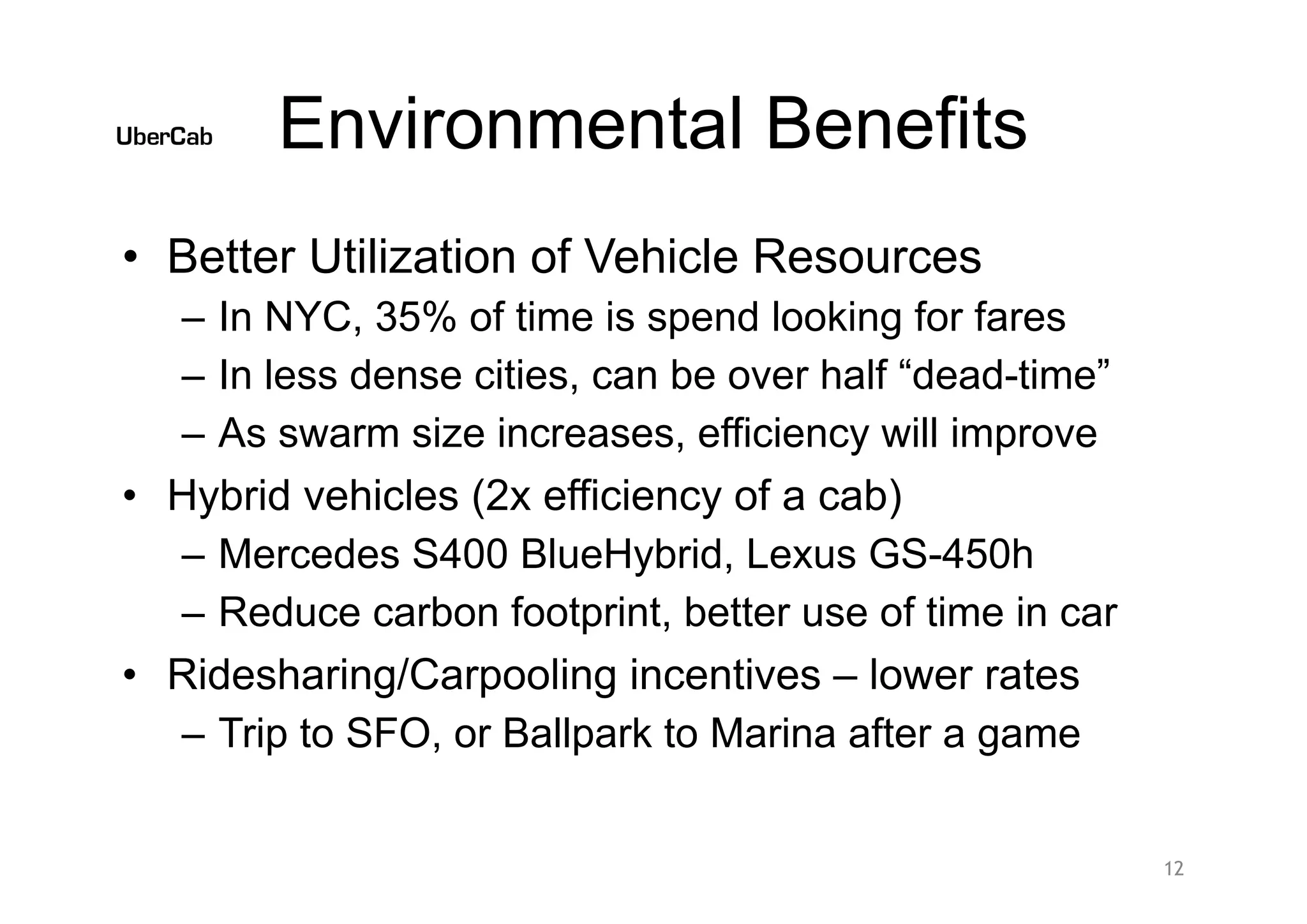
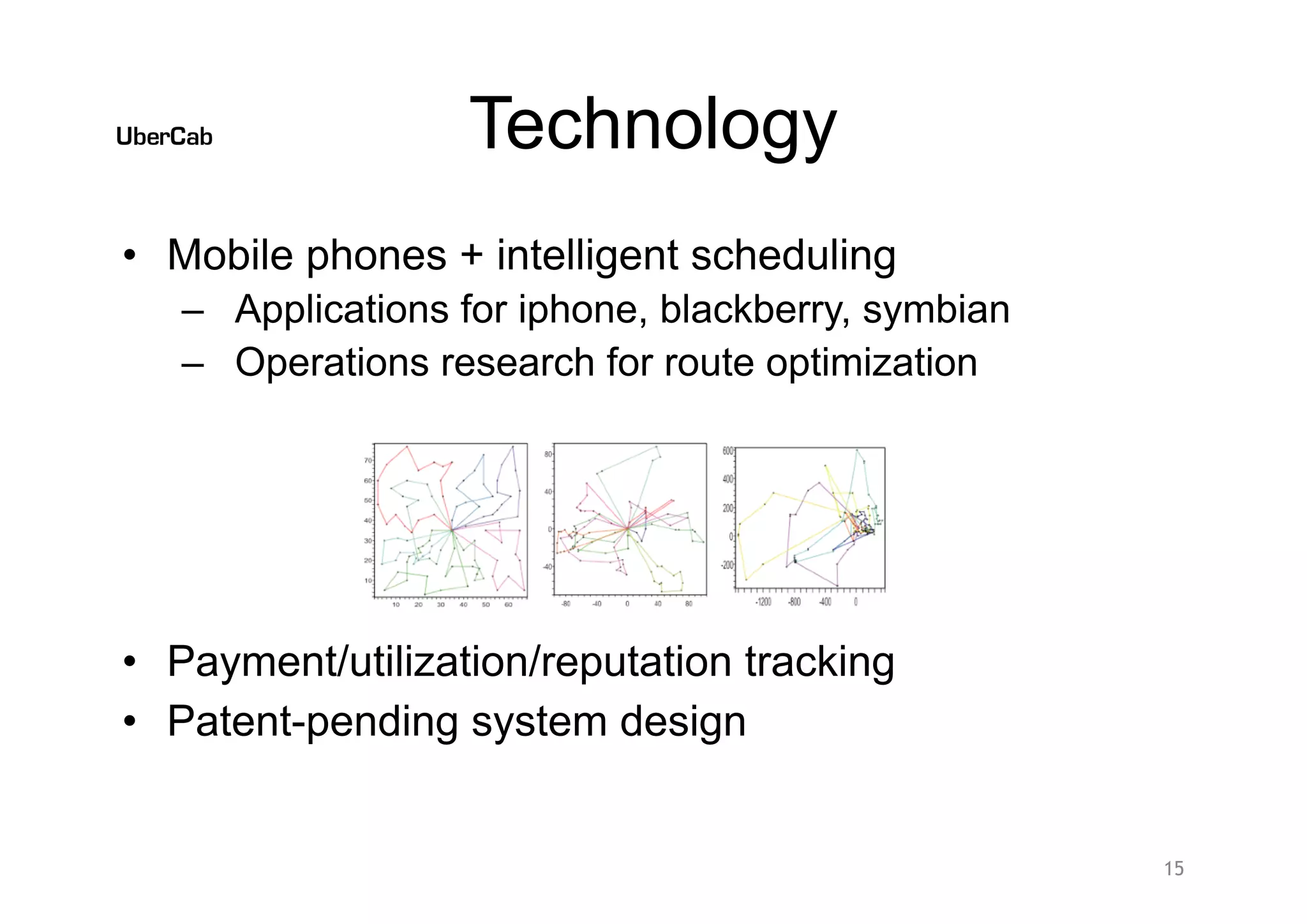
Slides 15 and 16 dig into the technical moat: intelligent scheduling, operations research, demand forecasting, and geo-aware auto-dispatch. These slides move beyond the interface to show the core engine that will reduce wait times and improve fleet utilization. Presenting route-optimization visuals and the concept of cars 'hovering' in statistically optimized positions signals that product scale depends on real engineering, not just brand or marketing.

For founders, this is a reminder to illustrate the defensible technical elements of your business. Highlight the algorithms or data advantages (demand forecasting, routing optimization, reputation systems) that materially change unit economics. Investors fund tech that is hard to replicate and that meaningfully improves customer experience or margins.

Key Takeaway: Demonstrate the technical (algorithmic/data) advantages that will improve unit economics and create a defensible moat as you scale.
Progress & Ask: Early traction and clear next steps

Progress & Ask: Early traction and clear next steps

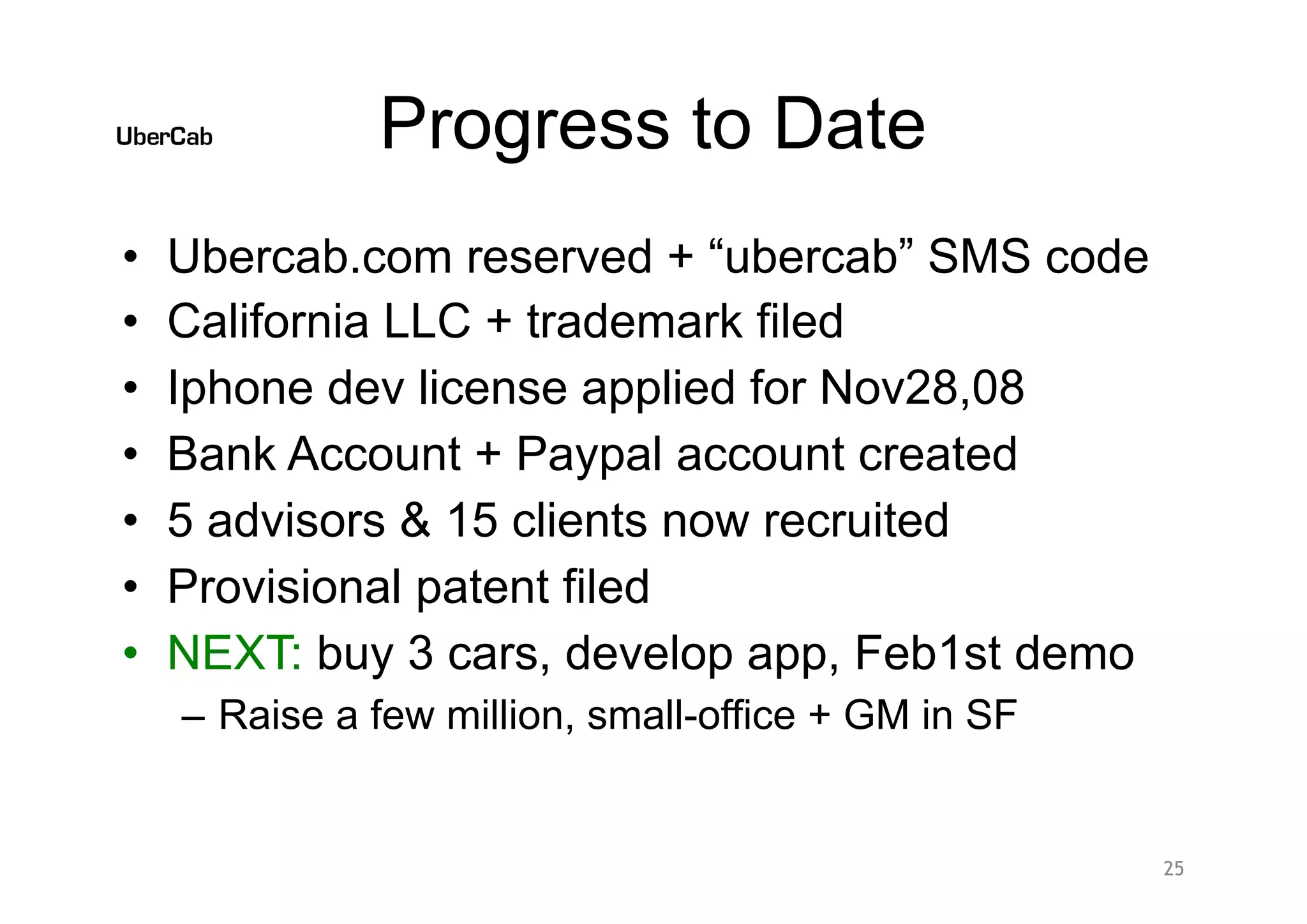
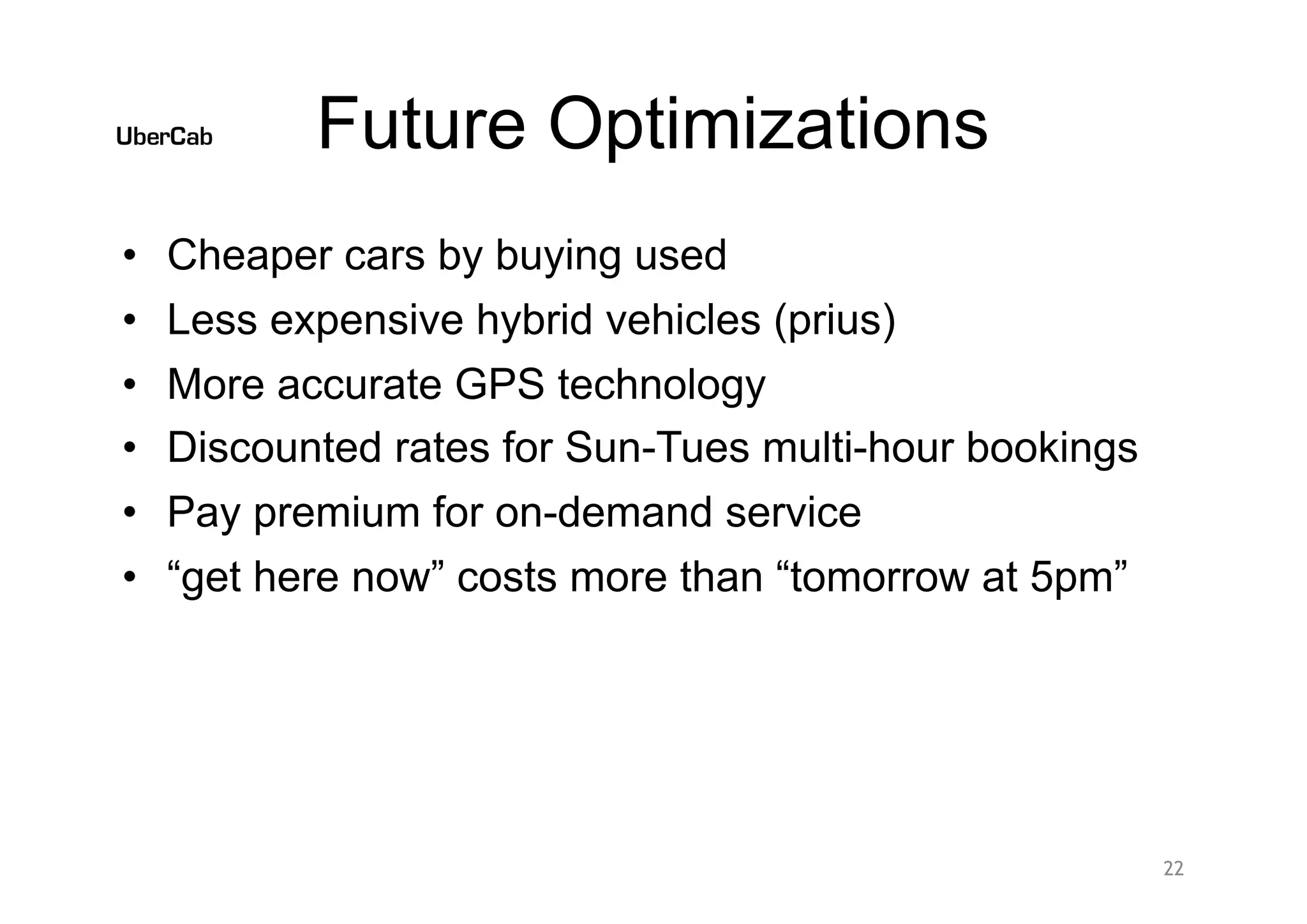
Slide 25 closes with practical milestones: domain secured, legal structure in place, advisors and initial clients recruited, provisional patent, and a specific next step to buy cars, develop the app, and show a demo. The team frames a concrete, short-term plan and a fundraising target. That grounding in execution — rather than vague growth aspirations — makes the seed ask credible.

Founders should emulate this by ending decks with tangible accomplishments and a concise 'next steps' funding use case. Investors want to know what their capital will buy and how soon they’ll see a demo or measurable milestones; this slide provides both clarity and accountability.

Key Takeaway: Close with concrete traction, specific near-term milestones, and a clear use of funds so investors know exactly what success looks like in the next quarter.

Conclusion: Key Lessons

This deck succeeds because it pairs a crisp customer value proposition with quantified market failure, operationally grounded product design, and a defensible technical approach. It balances aspirational positioning with concrete economics, distribution strategies, and a short-term execution plan. For founders creating pitch decks: lead with a one-line value prop, quantify the incumbent problem, show how your product and operations fix it, highlight technical advantages that create a moat, and finish with real traction and a specific use of funds. Clarity, evidence, and a credible roadmap are far more persuasive at seed stage than lofty market projections alone.