Stack up against Waze

Compare Your Deck

Waze's 2010 Pitch Deck

Consumer
Stage: Various
Raised: $67M total
Year: 2010
Slides: 14
Outcome: Acquired by Google for $1.3B

Pitch Deck

1 / 14
Slide 1
Click to expand

Deck Analysis

This pitch deck from Waze (2010 era) presents a location- and drive-based advertising product built on behavioral navigation data. It opens with user metrics to establish reach, then demonstrates a product that converts real-world movement into targeted ad opportunities (in-car, search, and OOH tie-ins). Notable elements are the early emphasis on measurable, context-aware ad formats and the concrete integration with the broader Google Ads ecosystem — a combination that helped make Waze attractive to acquirers and advertisers.

Opening: Proof of scale and engagement

Opening: Proof of scale and engagement

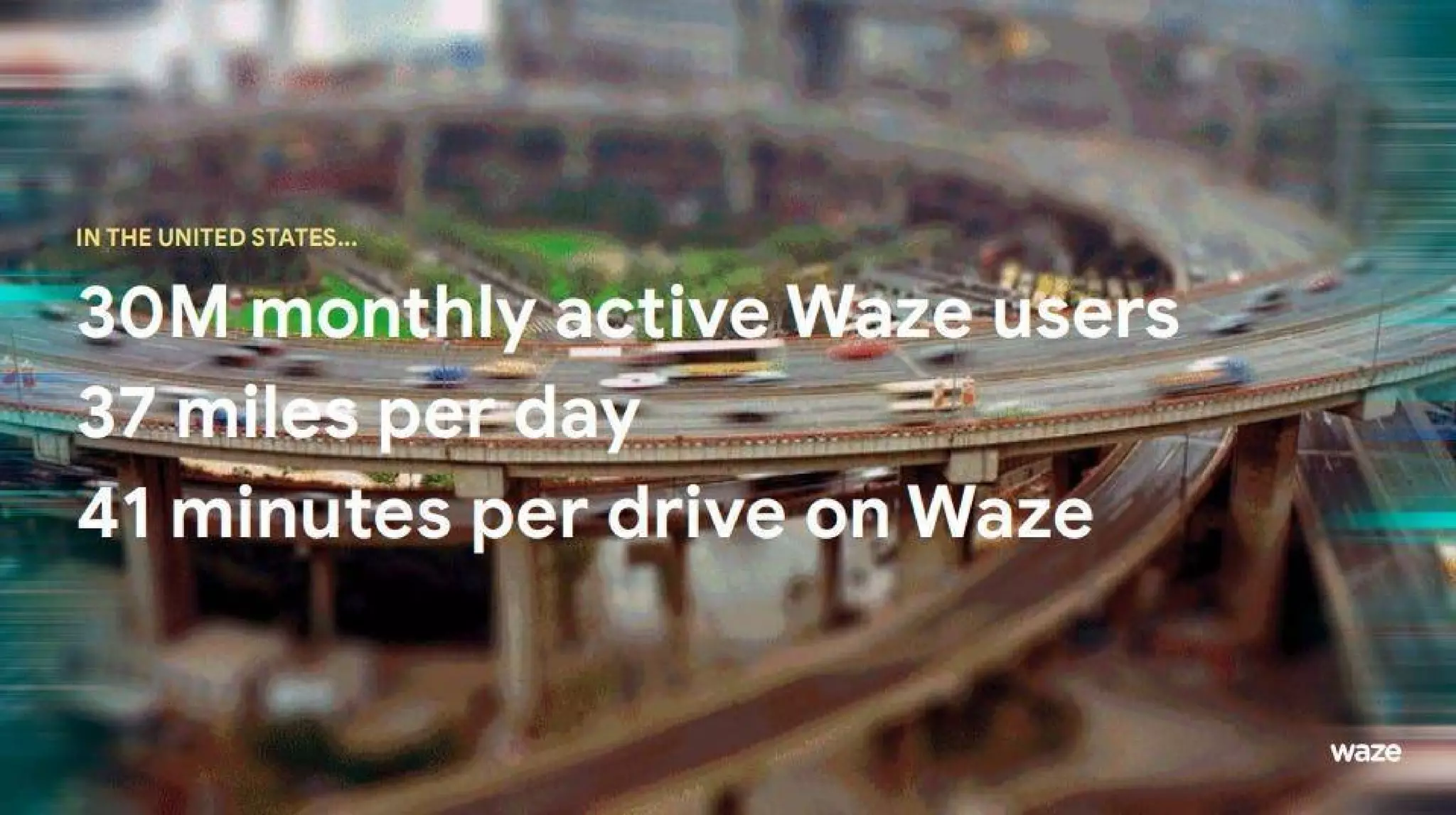
Slide 1 leads with clear, high-level user metrics: monthly active users, average miles driven per day, and minutes per drive. The visual (a busy highway photo) plus large typography telegraphs attention and relevance — advertisers immediately see that Waze is not a niche app but a high-frequency, long-duration platform. This is effective because it answers the first investor question: do you have audience scale and engagement?

Beyond the numbers, the slide implicitly sells the value proposition to advertisers (frequent, extended sessions in cars). Founders can learn from the slide’s prioritization: put your most compelling traction metrics up front and frame them in a way that ties directly to buyer value (advertisers in this case). Keep copy minimal and let a bold visual support the headline metrics.
Key Takeaway: Lead with a few high-impact, context-relevant metrics that directly map to buyer value — make scale and engagement the first thing investors see.
Product differentiation: What the product knows

Product differentiation: What the product knows

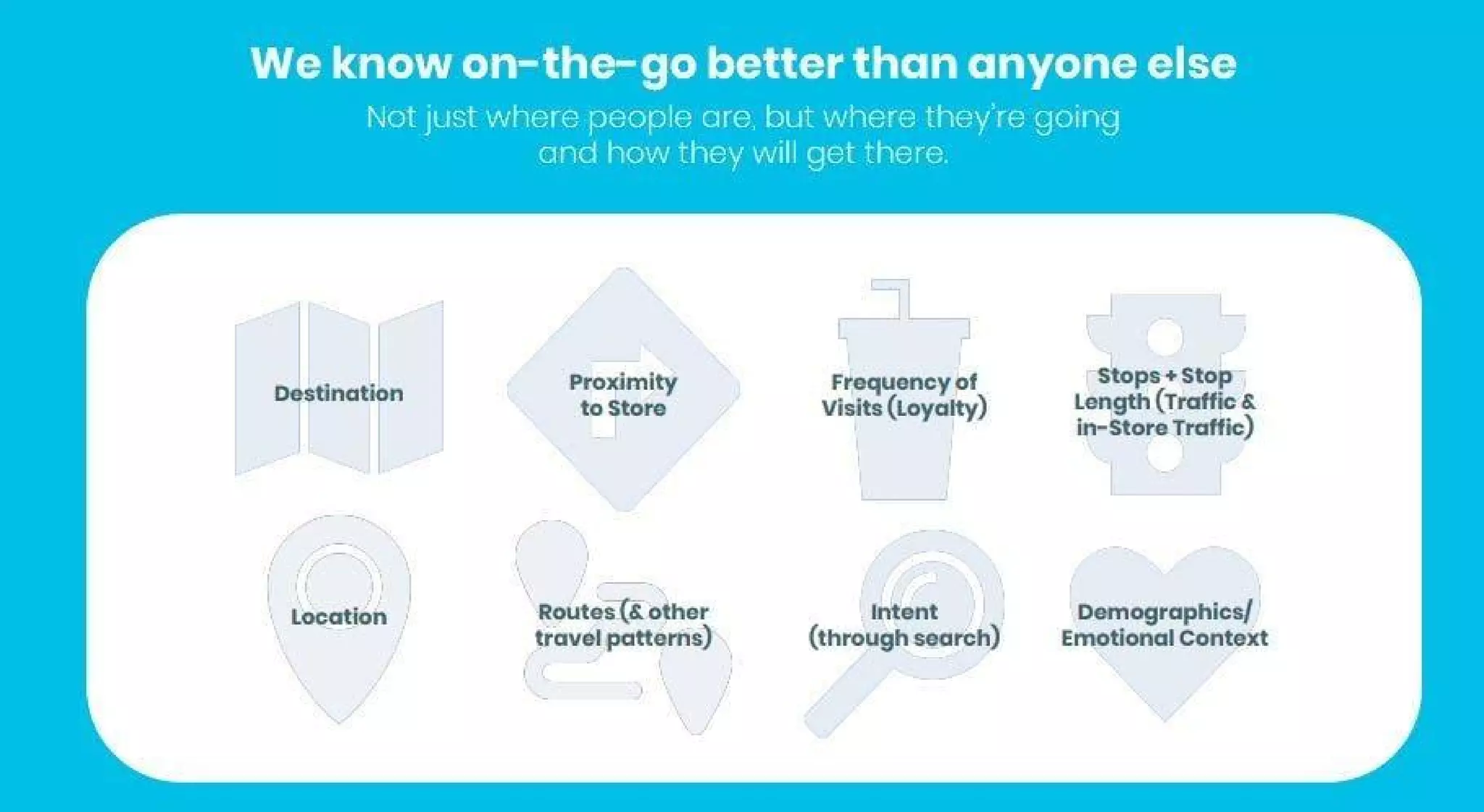
Slide 2 breaks down the unique data assets Waze captures — destination, proximity, frequency of visits, stop length, routes, intent, and even emotional/demographic context. This cataloging of capabilities is a smart move: it translates raw telemetry into advertising signals that buyers understand. Instead of just saying 'we have location data,' Waze maps raw signals to commercial use cases like loyalty measurement and in-store traffic.

For founders, the lesson is to translate technical capabilities into buyer-facing signals. A list of 'what we know' accompanied by short labels shows product depth without overwhelming the reader. It’s also a pre-emptive answer to privacy/utility questions — demonstrating useful, aggregated signals rather than exposing raw location traces.

Key Takeaway: Convert technical data advantages into clear commercial signals (e.g., intent, dwell, loyalty) so customers and investors immediately see monetizable value.
Strategic positioning: Integrating into a larger ad ecosystem

Strategic positioning: Integrating into a larger ad ecosystem

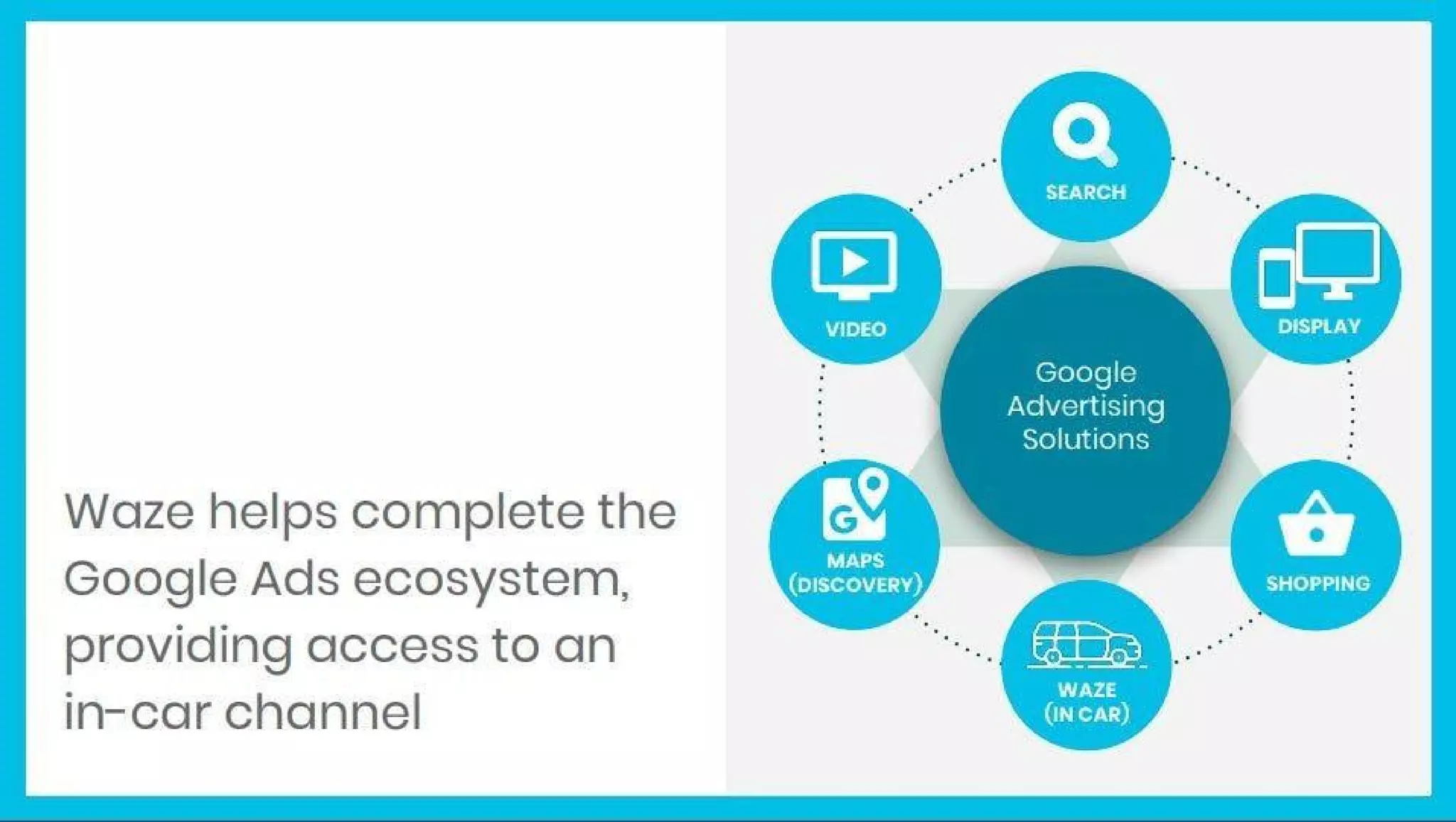
Slide 3 positions Waze as a complementary channel within the Google Ads ecosystem (search, display, video, shopping, maps). This is an important strategic narrative: rather than competing with existing ad channels, Waze fills a distinct in-car, real-time niche. That framing makes the business more defensible and attractive to strategic partners — and helps explain acquisition rationale.

Founders should note how packaging your product as an ecosystem component reduces 'build vs. buy' friction for potential partners and acquirers. The slide visually depicts adjacency to other channels, which simplifies the conversation for marketers looking to plug Waze into omni-channel plans.

Key Takeaway: Frame your product as a complementary, integratable piece of a buyer’s ecosystem to increase strategic appeal and lower adoption friction.
Targeting and timing: Drive-based contextual ads

Targeting and timing: Drive-based contextual ads

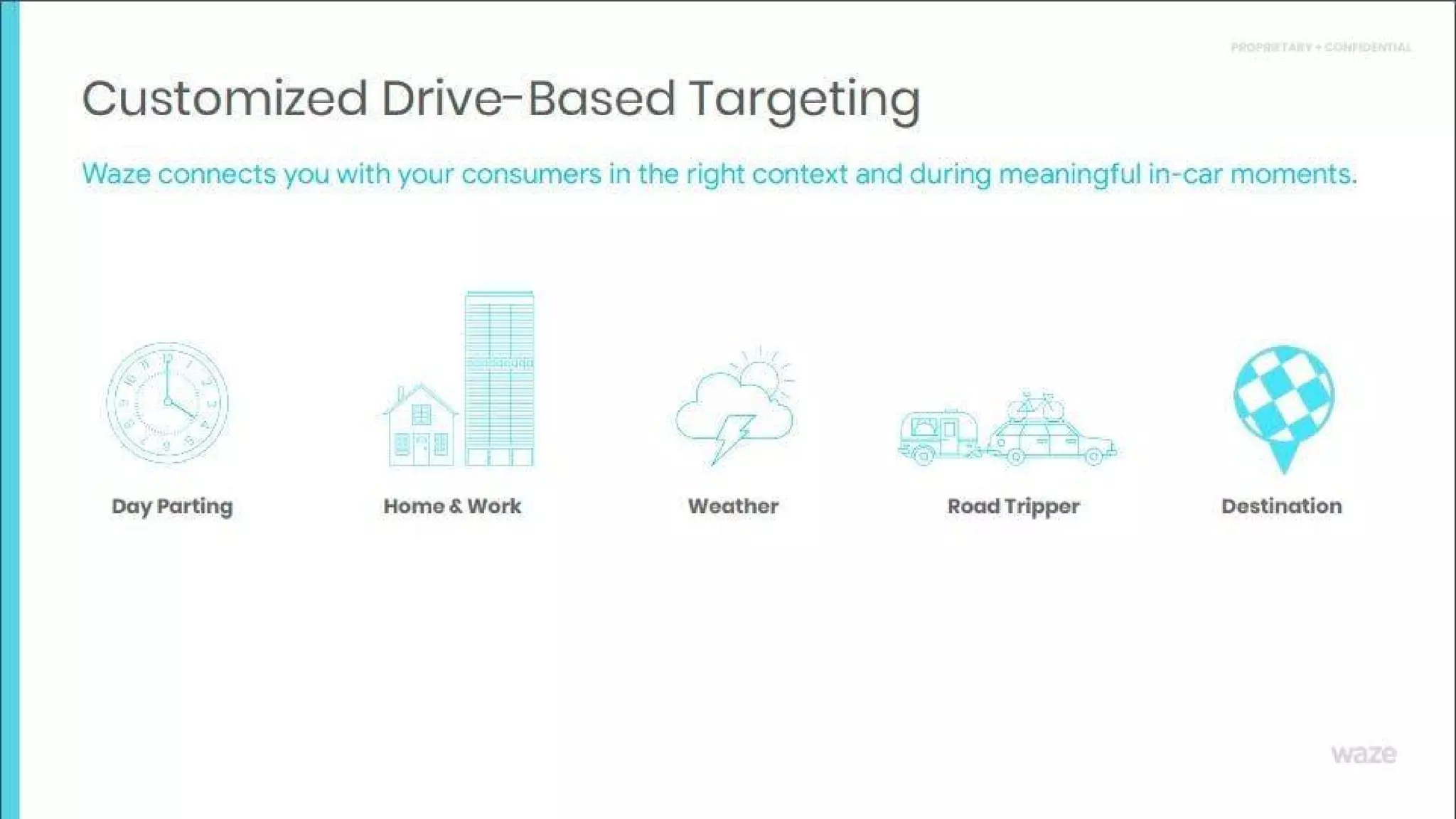
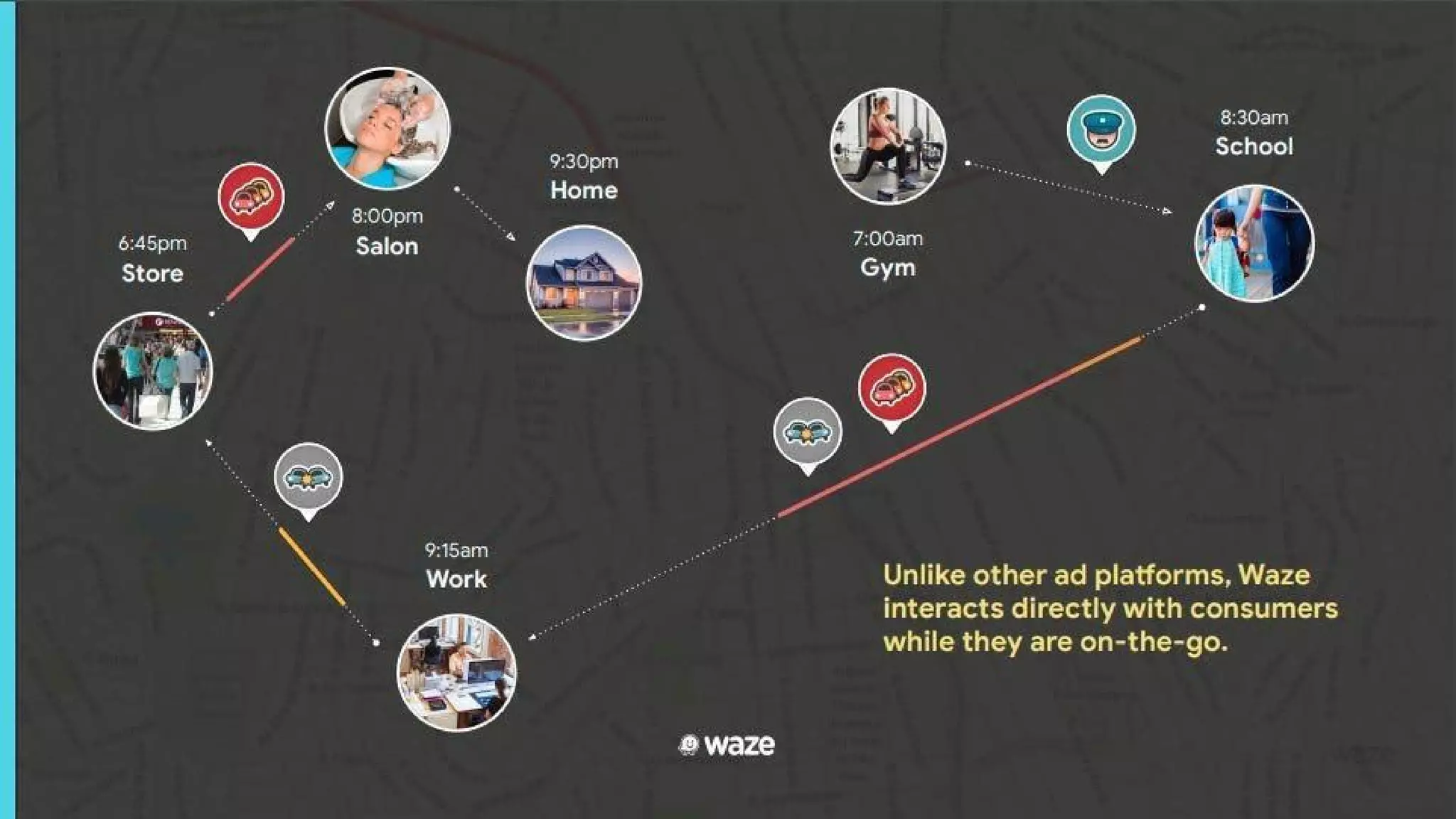
Slide 6 (Customized Drive-Based Targeting) shows how Waze turns contextual moments — dayparting, home & work, weather, road trips, destination — into targeting layers. The visual simplicity communicates a nuanced capability: targeting isn't just geographic, it's journey-based and time-aware. This demonstrates product sophistication while keeping it accessible to non-technical advertisers.

This approach is instructive: successful ad products often win by marrying signal richness with simple, campaign-ready targeting primitives (time of day, trip type, destination). Founders should aim to expose complex models through intuitive knobs so buyers can plan campaigns without deep technical integration.

Key Takeaway: Expose complex contextual targeting through straightforward, campaign-ready primitives (time of day, trip type, destination) so advertisers can act quickly.
Offline + online synergy: OOH innovation and the Zero-Speed Takeover

Offline + online synergy: OOH innovation and the Zero-Speed Takeover

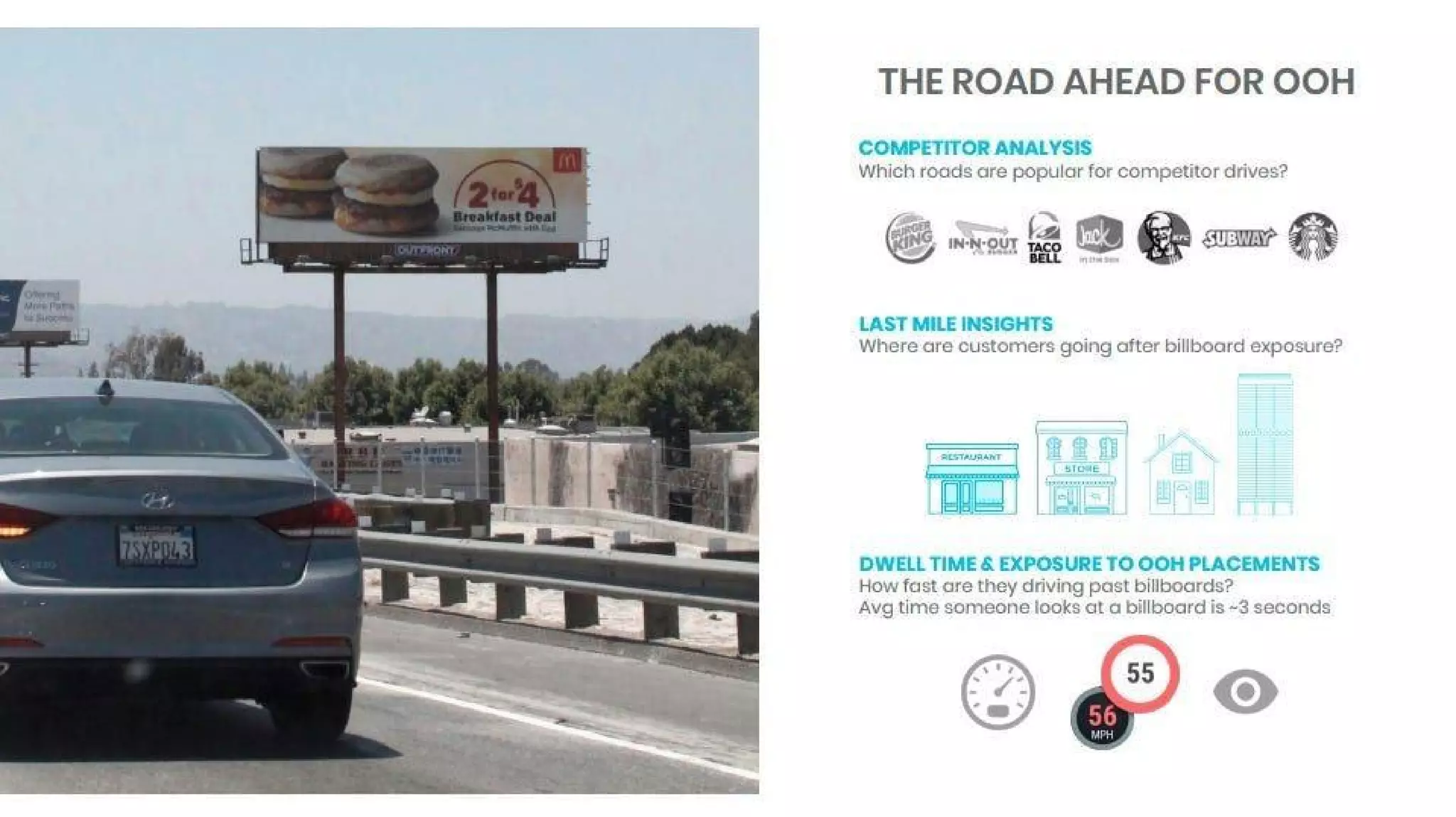
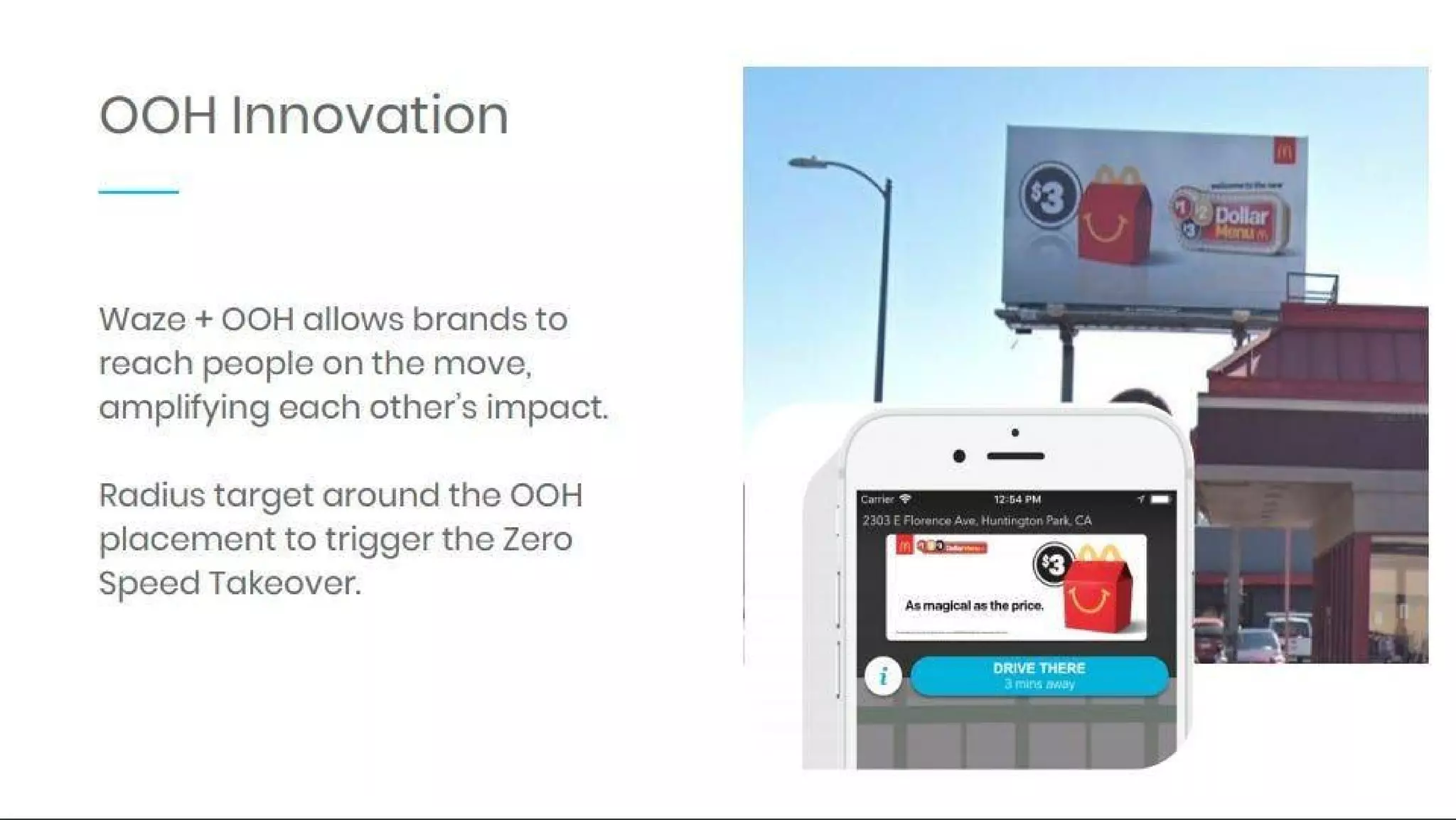
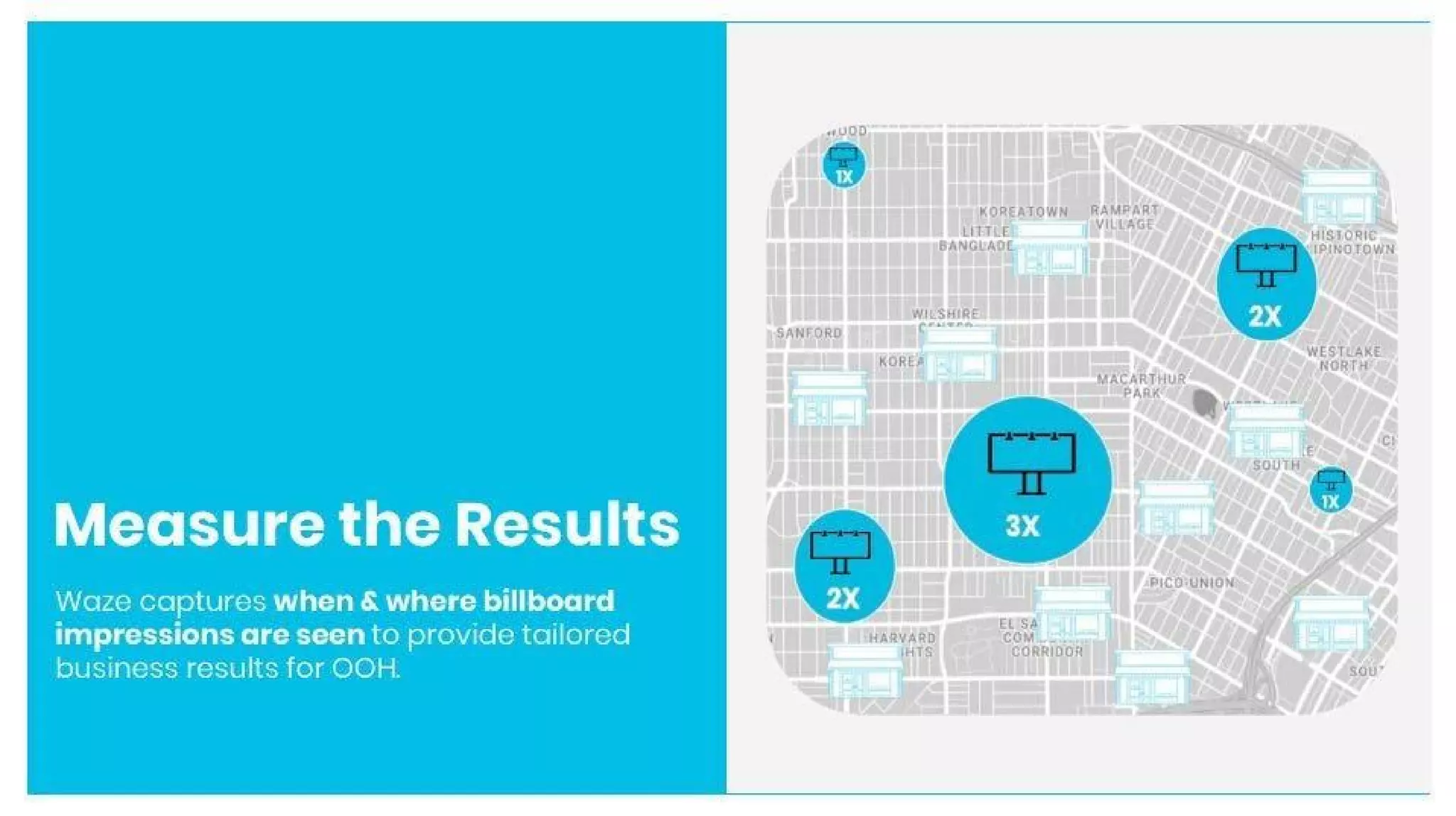
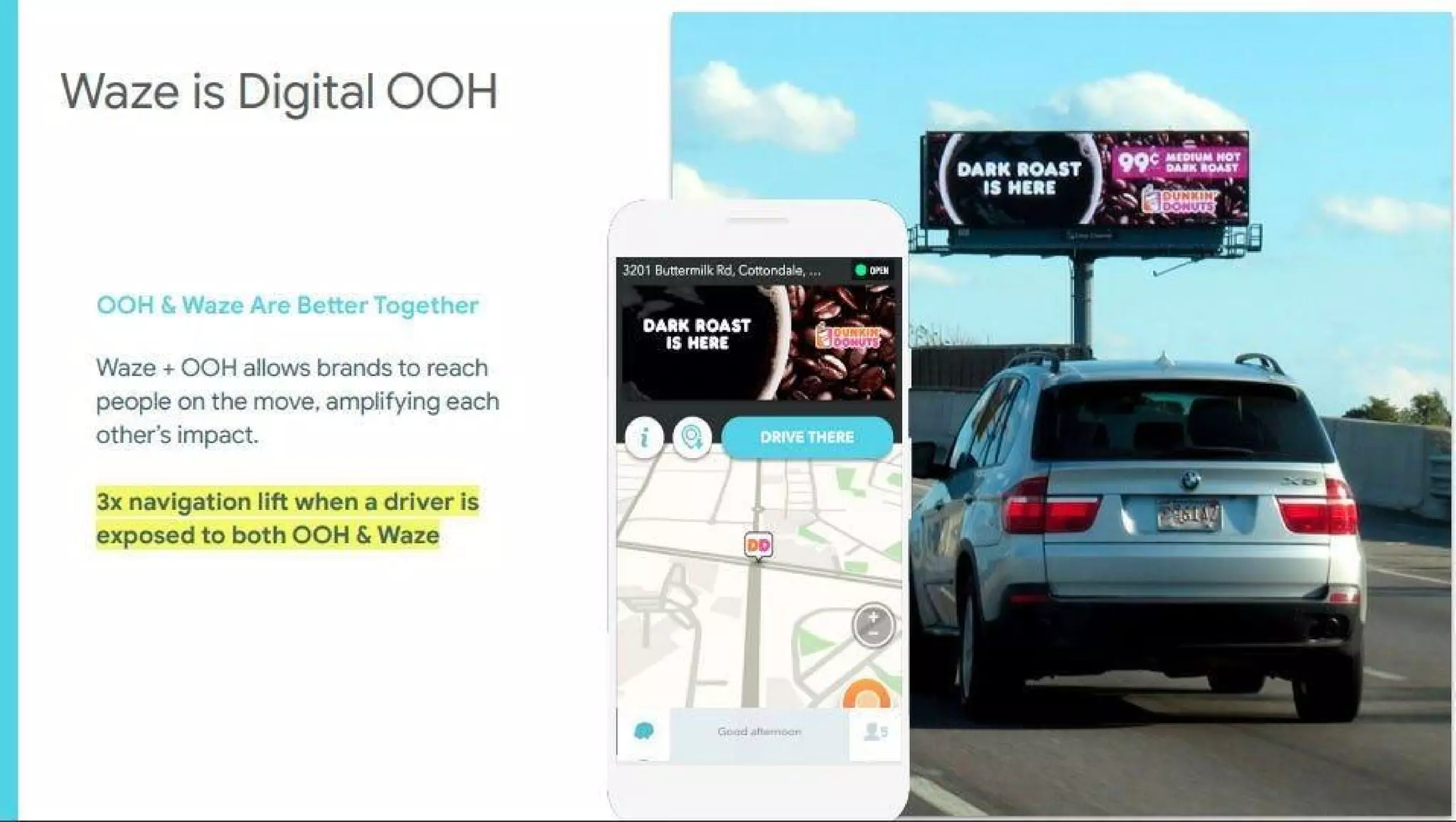
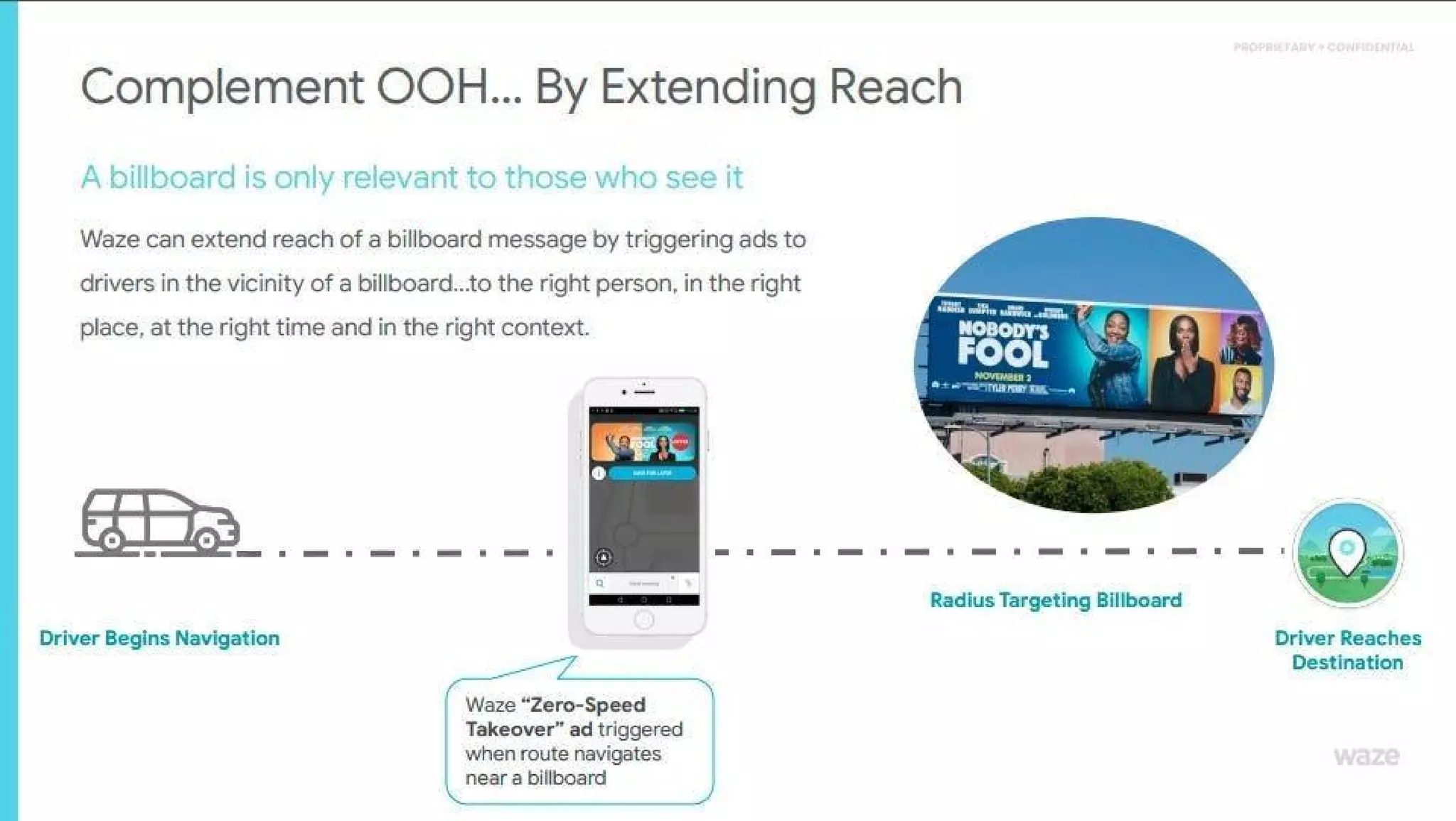
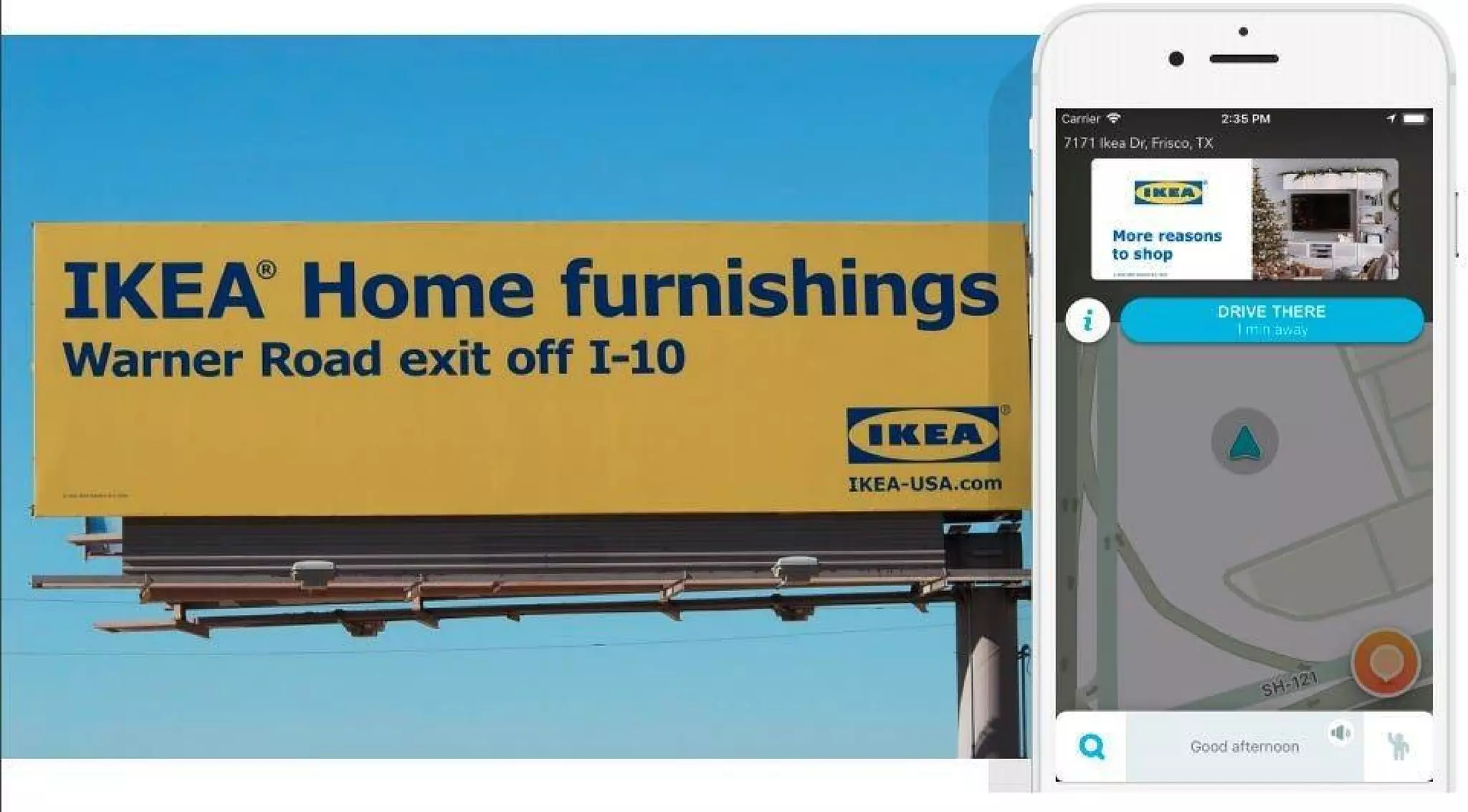
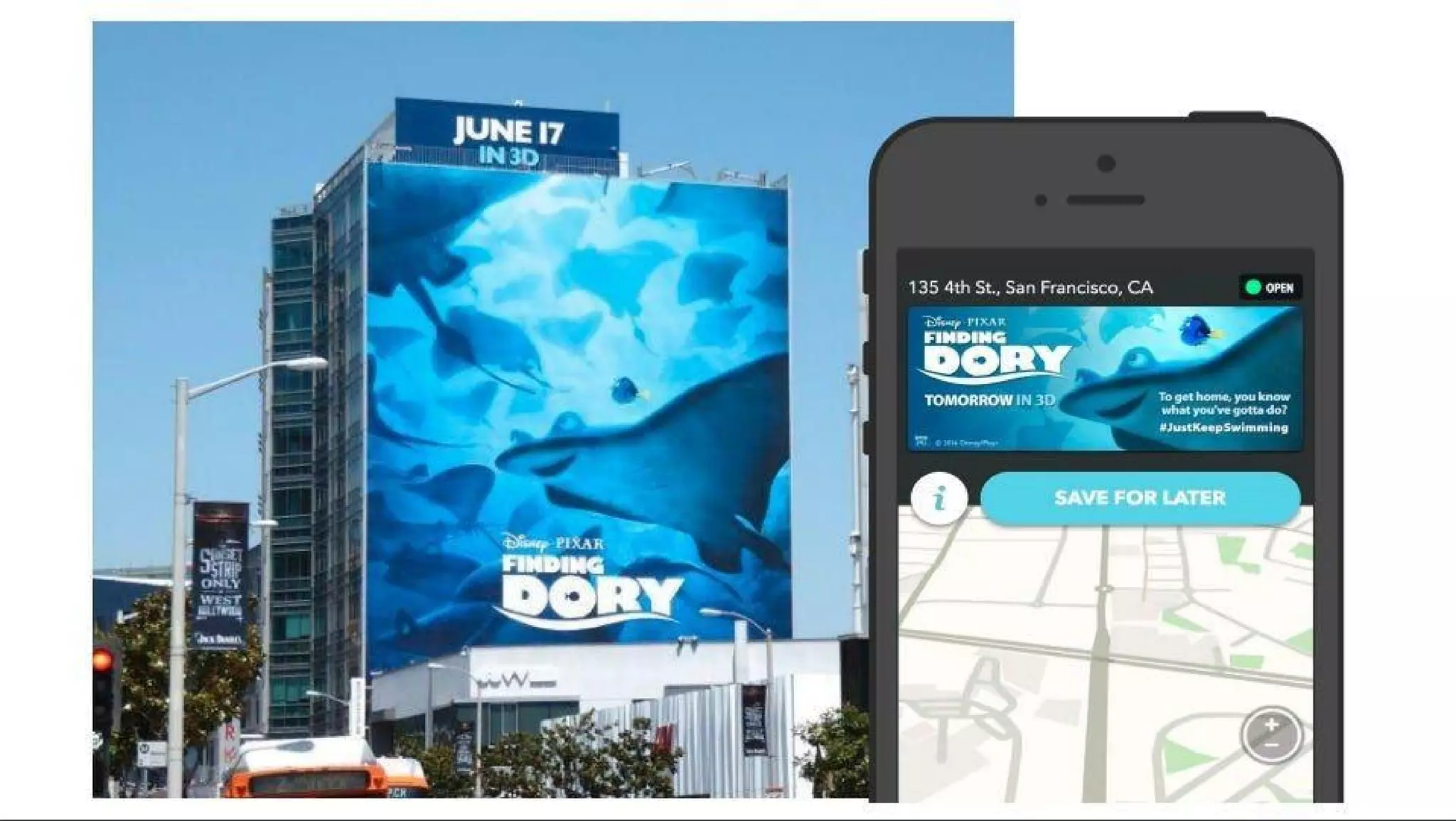
Slide 8 and related OOH slides present a compelling hybrid: outdoor billboards trigger in-app 'Zero-Speed Takeover' ads when drivers come within a radius of the placement. This unites traditional OOH exposure with measurable digital follow-up, addressing a key limitation of billboards (hard-to-measure impact). The deck uses real creative mockups (McDonald’s, IKEA, Finding Dory) which helps advertisers visualize cross-channel campaigns and outcomes.

The takeaway for founders is twofold: first, combine offline assets with digital measurement to create unique, defensible products; second, use concrete examples and visuals to make abstract integrations tangible to buyers. Demonstrating measurable lifts (e.g., navigation lift when exposed to OOH + Waze) turns a product into a clear ROI story rather than a speculative technology play.

Key Takeaway: Pair offline inventory with digital triggers and measurable outcomes to create differentiated, ROI-oriented ad products that bridge legacy and programmatic channels.
Go-to-market: Core ad formats and buyer-facing executions

Go-to-market: Core ad formats and buyer-facing executions

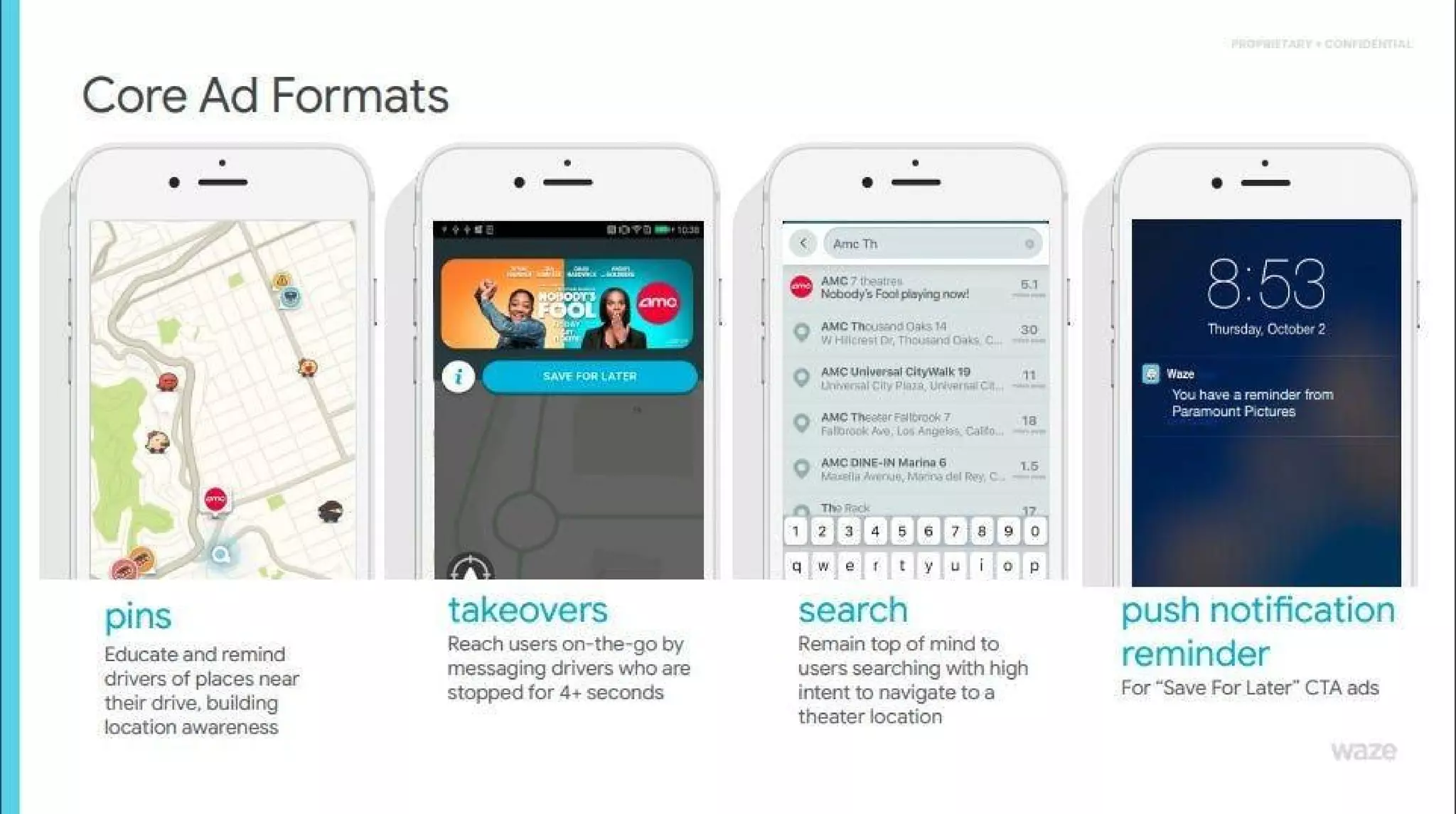
Slide 12 catalogs Waze’s core ad formats — pins, takeovers, search placement, and push reminders — each with a short benefit statement. This is a practical GTM slide: it tells buyers exactly how they can use the product, and ties creative units to user behavior (e.g., takeovers trigger when a user stops for 4+ seconds). Having a concise, productized list of ad formats reduces friction for media planners and simplifies pricing and measurement conversations.

For founders building monetization, this slide shows the importance of productizing ad inventory into repeatable units with clear triggers and CTAs. It also underlines the need to show not just capability but how that capability converts into buyer actions (save, drive, search) — essential for closing pilot campaigns and scaling revenue.

Key Takeaway: Productize inventory into a small set of clearly defined, trigger-based ad formats and pair each with a simple buyer benefit to speed adoption and campaign setup.

Conclusion: Key Lessons

Waze’s deck succeeds by combining hard traction, clear product capabilities, ecosystem positioning, and practical ad formats with concrete use-cases and measurable outcomes. The narrative moves logically from scale to signal to product to monetization and finally to ROI — a progression that simultaneously sells both the user product and the advertising business.

Actionable advice for founders: start your deck with the metrics that matter to your buyer, translate technical advantages into buyer-ready signals, position your product within existing ecosystems to lower adoption barriers, productize your monetization into simple, trigger-based formats, and use real creative examples and measurement claims to close the loop on ROI. These elements turn abstract technology into a compelling, executable commercial story.